


Strapi enterprise CMS decisions often fail not because of technology, but because the platform doesn't match how your organization works.
Many enterprises now explore headless CMS options like Strapi as alternatives to traditional platforms such as Drupal, Sitecore, or AEM, and understanding what is Strapi CMS helps teams evaluate whether the platform aligns with their modernization strategy.
This guide shows where Strapi genuinely fits enterprise needs and where alternatives add more value, based on real-world implementation experience.
What Do Enterprises Need from a Modern CMS?
Answer: Enterprises need three core capabilities; content governance, scalability across teams and regions, and speed without compromising stability.
A CMS in enterprise environments sits at the center of digital operations. Most enterprise teams look for:
Content Governance and Control
Enterprises require structured workflows with clear ownership:
- Draft → Review → Approval → Publish stages
- Role-based access controls
- Audit trails for compliance
- Accountability across teams
This matters especially in regulated industries or public-facing organizations.
Scalability Across Teams, Sites, and Regions
Modern enterprises rarely manage a single website. They operate across multiple:
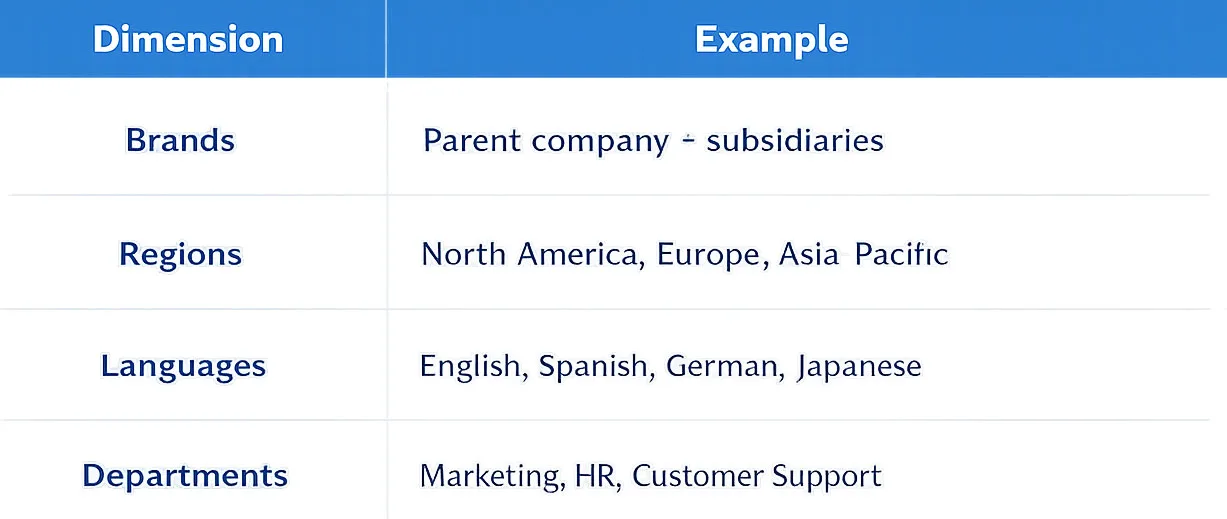
Your CMS must support this complexity without duplicating effort.
Speed Without Breaking Stability
Business teams want faster content updates. Engineering teams want fewer production risks. The right CMS platform balances content team autonomy with technical guardrails.
When Does Strapi Work Best for Enterprises?
Answer: Strapi excels when enterprises prioritize flexibility, custom content modeling, and avoiding vendor lock-in with API-first architecture.
API-First Architecture for Modern Frontends
Content becomes structured data, not rigid page templates. This enables:
- Content reuse across platforms (web, mobile, IoT)
- Faster frontend experiences
- Freedom from CMS-imposed design constraints
Organizations planning large-scale implementations often work with providers offering Strapi CMS development services to ensure the architecture supports enterprise scalability and performance.
Example: A retail company uses Strapi to deliver product information to their website, mobile app, and in-store kiosks from a single content source.
Custom Content Modeling for Complex Use Cases
Strapi enterprise CMS shines when handling:
- Nested content structures
- Shared components across brands
- Complex relationships between content types
For enterprises building complex digital ecosystems, investing in enterprise CMS website development solutions ensures content models align with long-term governance and integration requirements.
Example: A media company manages articles, authors, categories, and sponsored content with custom relationships—something rigid CMS platforms struggle to accommodate.
Freedom from Vendor Lock-In
Strapi's open-source foundation provides:
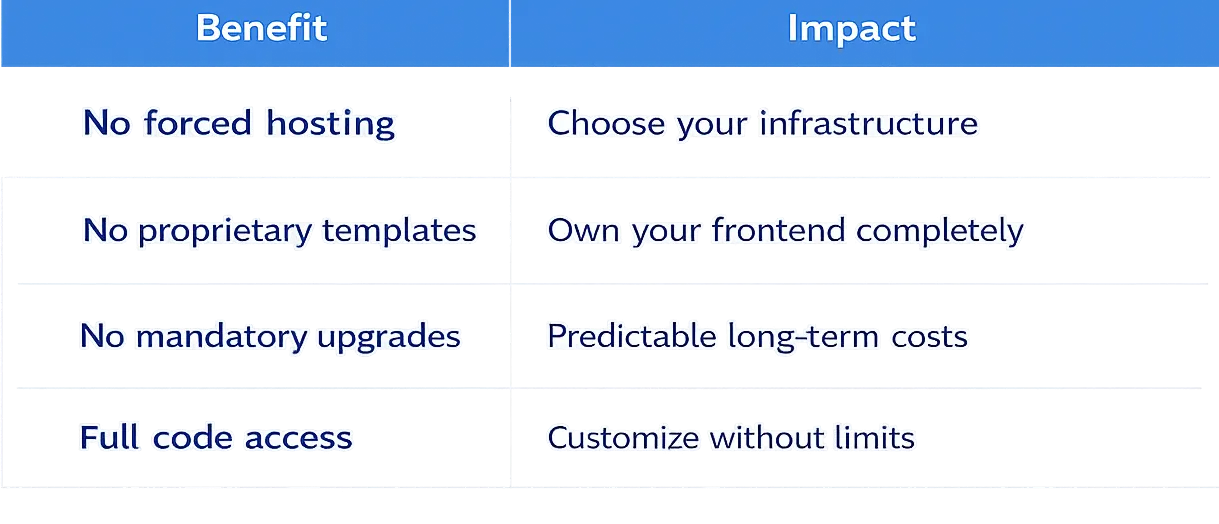
This appeals to enterprises wanting long-term control and predictable costs.
When Should You Avoid Strapi?
Answer: Avoid Strapi if your team needs heavy built-in marketing features, lacks technical maturity, or doesn't want platform ownership responsibility.
Teams Needing Heavy Out-of-the-Box Marketing Features
Some enterprises rely extensively on:
- Built-in personalization engines
- Advanced WYSIWYG page builders
- Native A/B testing tools
- Integrated analytics dashboards
Strapi intentionally avoids opinionated marketing features. These can be integrated, but they're not included by default.
When this matters: If your marketing team expects drag-and-drop personalization without developer involvement, traditional platforms like Adobe Experience Manager may be better.
Organizations Without Technical Maturity
Headless CMS introduces architectural freedom; and responsibility.
If your organization lacks:
- Clear frontend ownership
- API design discipline
- Structured release processes
- DevOps capabilities
Strapi can expose operational gaps rather than hide them.
Reality check: Organizations needing "install and run" solutions may struggle with headless architecture demands.
Teams Wanting Limited Platform Ownership
Does your organization value clear ownership and autonomy?
Strapi works best when responsibilities are clearly defined:
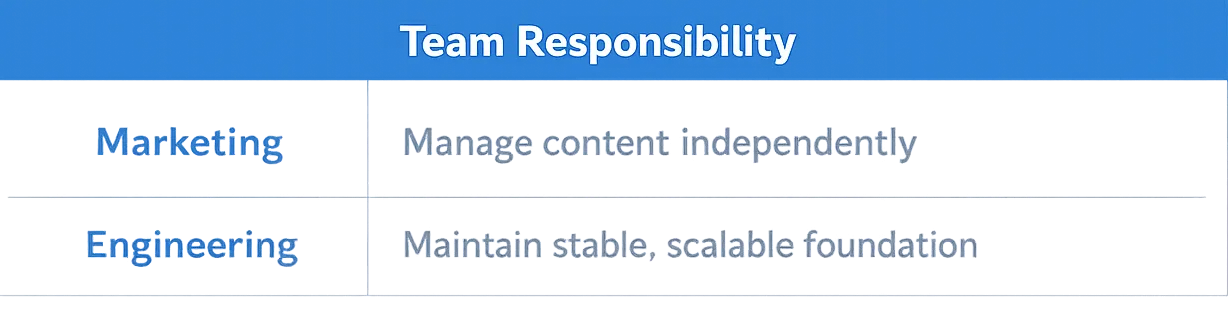
When CMS is treated as a shared platform, marketing gains predictable workflows while engineering ensures security and performance.
If ownership is unclear or no team wants platform responsibility, managed CMS solutions may be more appropriate.
How to Decide If Strapi Fits Your Organization
Answer: Evaluate platform ownership appetite, content structure needs, and your 3-5 year digital strategy before choosing Strapi.
Does Your Team Own the Platform - or Want To?
Strapi works best when:
- Engineering teams control architecture decisions
- CMS is treated as a platform, not a plugin
- Teams accept responsibility for hosting and scaling
If this aligns with your culture, Strapi becomes a strong fit.
Is Your Content Structured or Page-Driven?
Strapi excels when content is:
- Reused across multiple channels
- Consumed by different applications
- Treated as data, not static pages
Example comparison:
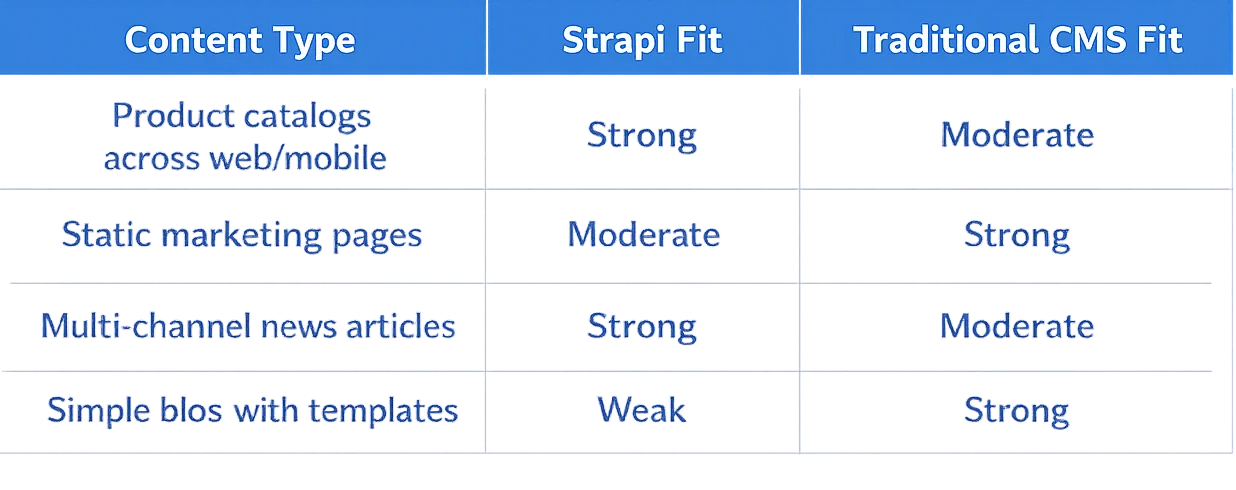
If your strategy revolves around static page layouts, traditional platforms may still serve you better.
Are You Planning for the Next 3-5 Years?
Enterprises adopting enterprise content management solutions like Strapi typically do so as part of
- CMS modernization initiatives
- Frontend re-architecture projects
- Digital transformation programs
If your CMS decision is short-term or tactical, Strapi's benefits may not fully materialize.
Conclusion
Strapi isn't "the best CMS" and that's exactly why it works well for the right enterprises.
It shines in environments valuing:
- Architectural flexibility
- Clean separation between content and presentation
- Long-term control over digital platforms
But it demands clarity, ownership, and technical maturity.
For enterprises treating CMS as a strategic platform rather than just a publishing tool, Strapi can be a strong foundation—provided the decision is intentional and informed.