
You have a great app idea. You know it can solve real-world problem, serve your customers, or open a new revenue stream. What stands between you and that vision isn't the idea but finding the right team offering reliable mobile application services to bring it to life.
The mobile app development market is booming. The global mobile app market is projected to reach $626 billion by 2030.
With that kind of growth comes a flood agencies, freelancers, and offshore studios all competing for your budget. The hard truth is that not all of them will deliver what they promise.
According to a BCG survey, nearly half of all C-suite executives say more than 30% of their technology projects are over budget and late.
With the growing demand for mobile app development in USA, businesses now have more options than ever, but also more complexity in choosing the right partner. At Openspace Services, we've seen firsthand what separates a successful app launch from a costly do-over. This guide gives you a practical framework to choose the right custom mobile app development partner with confidence.
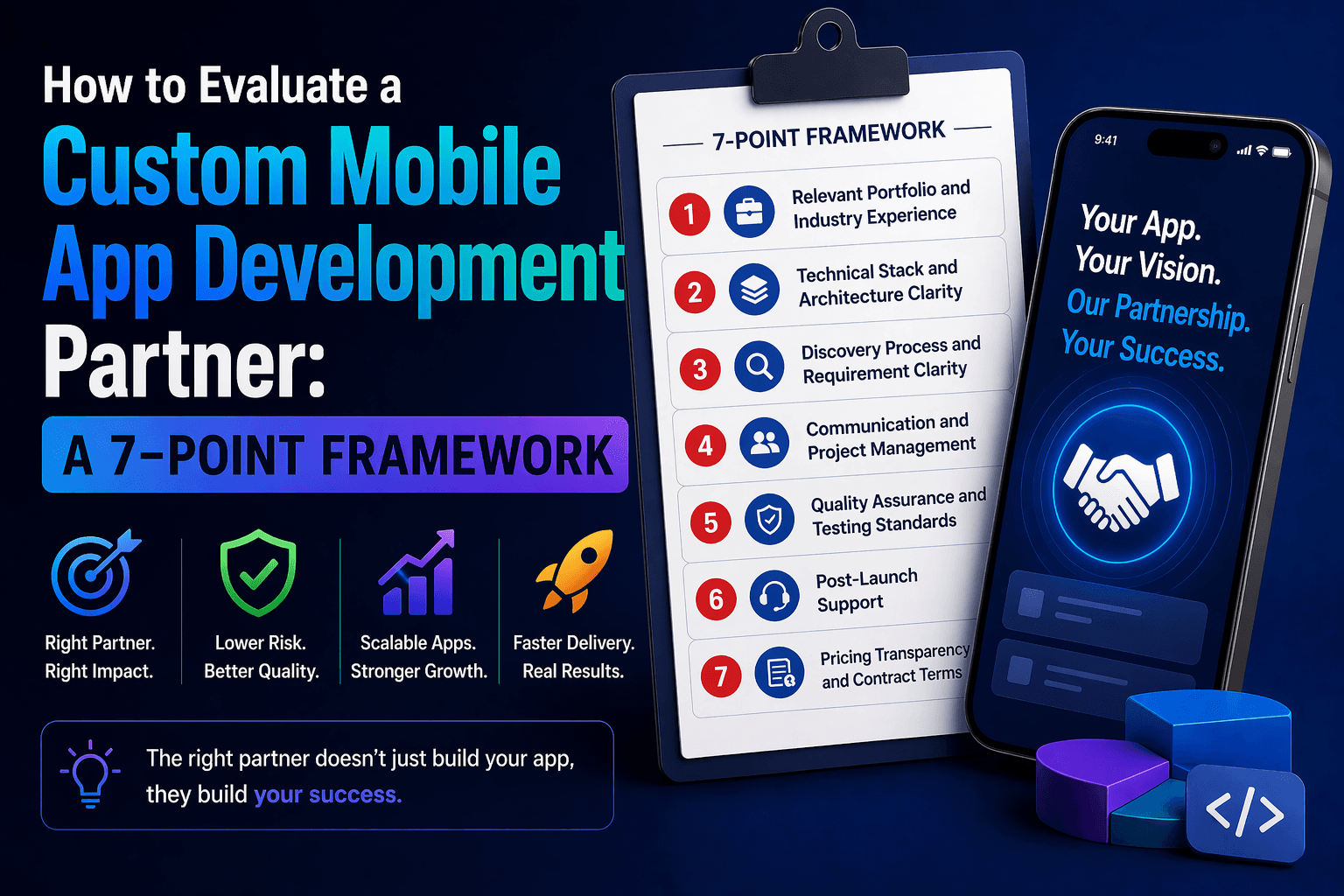
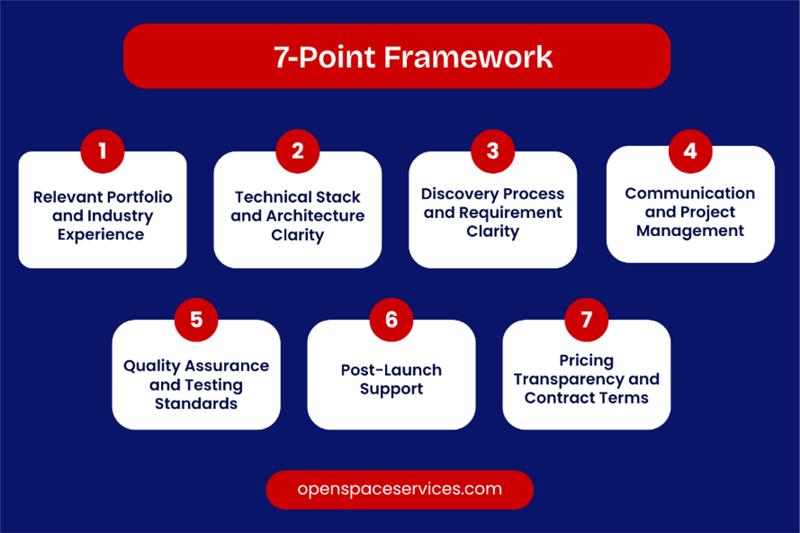
7-Point Framework You MUST Check Before Choosing Custom Mobile App Development Partner
Whether you're evaluating global vendors or mobile app development services in USA, this framework will help you make a confident decision.
1. Relevant Portfolio and Industry Experience
A strong portfolio from a mobile app development services in USA provider should demonstrate real-world experience, scalability, and domain expertise.
When evaluating any mobile app development agency, the first question should be:
“Have you built something like this before?”
A strong portfolio in custom mobile app development services should demonstrate:
- A team that has built healthcare apps understands compliance requirements like, data encryption, secure access controls, and patient data privacy standards.
- One experienced in healthcare knows the UX constraints that come with building for patients or clinicians.
That domain knowledge translates directly into fewer mistakes and a faster build.
When reviewing a portfolio, go further than screenshots. Ask for live apps in the relevant store, download them, use them, and pay attention to the details. Look for:
- Complexity signals: Third-party integrations, real-time data, offline functionality
- Platform coverage: Do they build for both iOS and Android, or just one?
- Scale indicators: Apps with high ratings and active user bases are a strong sign
Anyone can show you a polished demo. What matters is whether real users kept coming back to it.
2. Technical Stack and Architecture Clarity
A reliable mobile development service provider will always explain technical decisions in business terms, not just technical jargon.
You don't need to be a developer to evaluate this. You do need a partner who can explain their technical decisions in plain language and who makes those decisions based on your use case, not their convenience.
One of the most important choices early in any project is whether to build natively (separate codebases for iOS and Android) or cross-platform (a single codebase that runs on both).
Neither approach is universally right. The right answer depends on your app's complexity, performance requirements, and budget. A credible partner will walk you through that trade-off clearly.
Ask directly: “Can this architecture scale?” An app that works well at 1,000 users but collapses at 100,000 is a rebuild waiting to happen and rebuilds are expensive.
What to watch for:
- Vague or jargon-heavy answers with no real substance
- A one-size-fits-all recommendation regardless of your context
- Overreliance on templates or off-the-shelf code dressed up as custom development
Also Read: Native vs Cross Platform in 2026: When the Performance Gap Actually Matters
3. Discovery Process and Requirement Clarity
Great mobile application services always start with discovery.They are built by teams that ask the right questions first.
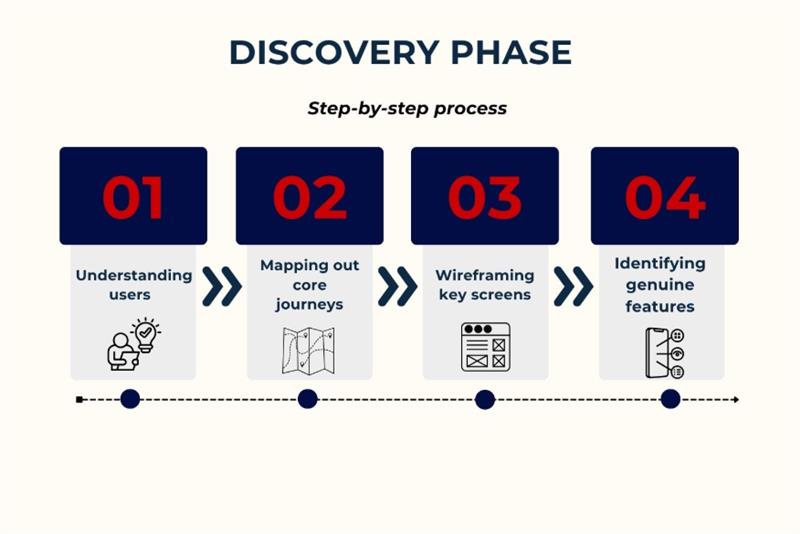
Why does this matter? Because the slow expansion of features and requirements mid-project is one of the primary reasons apps run over budget and over time.
A good test: Ask any prospective partner how they handle a situation where requirements change mid-project. Their answer will reveal their entire approach to the relationship.
4. Communication and Project Management

This is especially important when working with offshore teams compared to mobile app development in USA, where timezone alignment may be easier.
Your app is not a one-off transaction. It is a multi-month collaboration that requires alignment, transparency, and clear lines of communication. A development partner who goes quiet between milestones is a red flag regardless of how impressive their portfolio looks.
Ask about the operational specifics:
- Who is your dedicated point of contact and what is their role?
- What tools are used for project tracking? (Jira, Linear, Notion)
- How often will you receive progress updates and build reviews?
- How are blockers communicated and resolved?
For teams working across time zones, clarity here is even more critical. Delayed communication compounds quickly in software projects.
"The best development partners don't just build your app. They keep you informed every step of the way, so there are no surprises at launch."
5. Quality Assurance and Testing Standards
Any serious mobile application services provider must have a well-defined QA and testing process in place.
Bugs are not just a technical problem. They are a user retention problem.
88% of users say they will abandon an app if it consistently experiences glitches or technical bugs.
That number should give every product owner pause. Your app may be brilliant in concept, but if it crashes, freezes, or behaves inconsistently, almost 90% your users will simply leave and most of them will never come back.
Any serious mobile app development services provider must have:
- Is QA a dedicated function, or do developers test their own code?
- How many real devices do they test across before each release?
- What types of testing are covered: functional, performance, security, and user acceptance?
- What is their post-launch bug fix policy?
There is also a strong financial case for catching bugs early. Research shows that fixing a defect after launch can cost up to
Fixing a bug in production can cost up to 100x more than catching it during the design phase.
The lesson: Quality assurance is not an optional line item. It is a cost-saving measure.
6. Post-Launch Support and Long-Term Partnership

The best mobile development service providers focus not just on launch, but on long-term product success.
Launching your app is not the end, it is a new beginning. Operating systems update. New device sizes emerge. User behaviour shifts. Security vulnerabilities are discovered. A development partner who disappears after launch leaves you exposed.
Before signing anything, clarify exactly what happens after go-live. These are some of the common questions our clients ask us:
- Are OS updates and security patches included in the engagement, or billed separately?
- Do you offer retainer models for ongoing feature development?
- Will we receive full source code, documentation, and asset ownership at handover?
- Can we speak to any clients who have worked with you for more than a year?
That last point is particularly revealing. Long-term clients are the clearest signal that a partner consistently delivers and is worth keeping around.
7. Pricing Transparency and Contract Terms
Choosing the lowest quote is rarely the best deal. What matters more is understanding exactly what you are paying for, and what happens when something changes.
There are two common pricing models to understand:
- Fixed price: You agree on scope upfront, and the cost is locked in. Works well when requirements are clear and stable.
- Time-and-materials: You pay for hours worked. More flexible for evolving projects but requires stronger project oversight to avoid cost overruns.
Either model can work, the key is that your partner explains the trade-offs honestly and recommends what is right for your situation, not for their margins.
Equally important: read the contract carefully or have someone who can. Focus on:
- IP ownership: Who owns the code, design files, and data once the project is complete?
- Change request process: How are scope changes scoped and priced?
- Payment milestones: Are payments tied to deliverables, or to the calendar?
Payment tied to deliverables is one of the strongest signals of a trustworthy partner. It means they are accountable for what they promise.
Putting It All Together
Choosing a custom mobile app development partner is one of the most consequential decisions you will make for your product. Done right, it sets you up for a smooth build, a strong launch, and a product that users actually love. Done wrong, it can cost you time, money, and market opportunity.
To summarise the 7-point framework:
- Relevant portfolio and industry experience
- Technical stack and architecture clarity
- Discovery process and requirement clarity
- Communication and project management
- Quality assurance and testing standards
- Post-launch support and long-term partnership
- Pricing transparency and contract terms
No single factor tells the whole story. But a partner who scores well across all seven is one worth trusting with your product.
Ready to Build? Let's Talk
At Openspace Services, we believe great apps start with great conversations. Before we write a single line of code, we take the time to understand your idea, your users, your goals and give you an honest picture of what it will take to bring your vision to life.
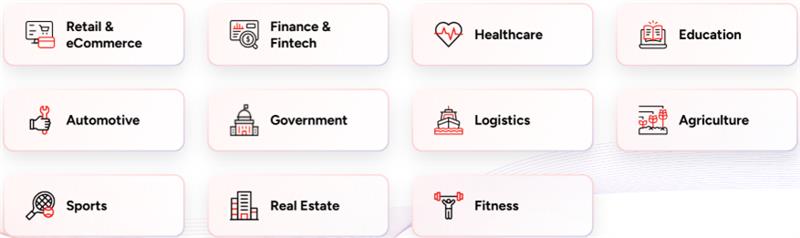
Whether you have a fully defined brief or just a napkin sketch, we are happy to explore it with you. These are all the industries we have worked for in the last decade
Book a free consultation with the Openspace Services team.