




If your software releases are still slow despite adopting Agile methodologies and moving to the cloud, the problem is often not your developers or your infrastructure.
The problem is usually the gap between development and operations.
This gap creates bottlenecks in testing, deployment, security reviews, environment management, and release approvals. DevOps addresses these bottlenecks by creating a streamlined process that allows code to move from development to production faster, more reliably, and with fewer manual interventions.
In simple terms:
DevOps is the practice of combining development, operations, automation, and continuous delivery through modern DevOps consulting and implementation services.
What Causes Slow Software Releases?
Many organizations assume that moving to the cloud automatically makes software delivery faster.
In reality, cloud infrastructure only provides the platform. It does not solve workflow inefficiencies.
Some of the most common reasons software releases slow down include:
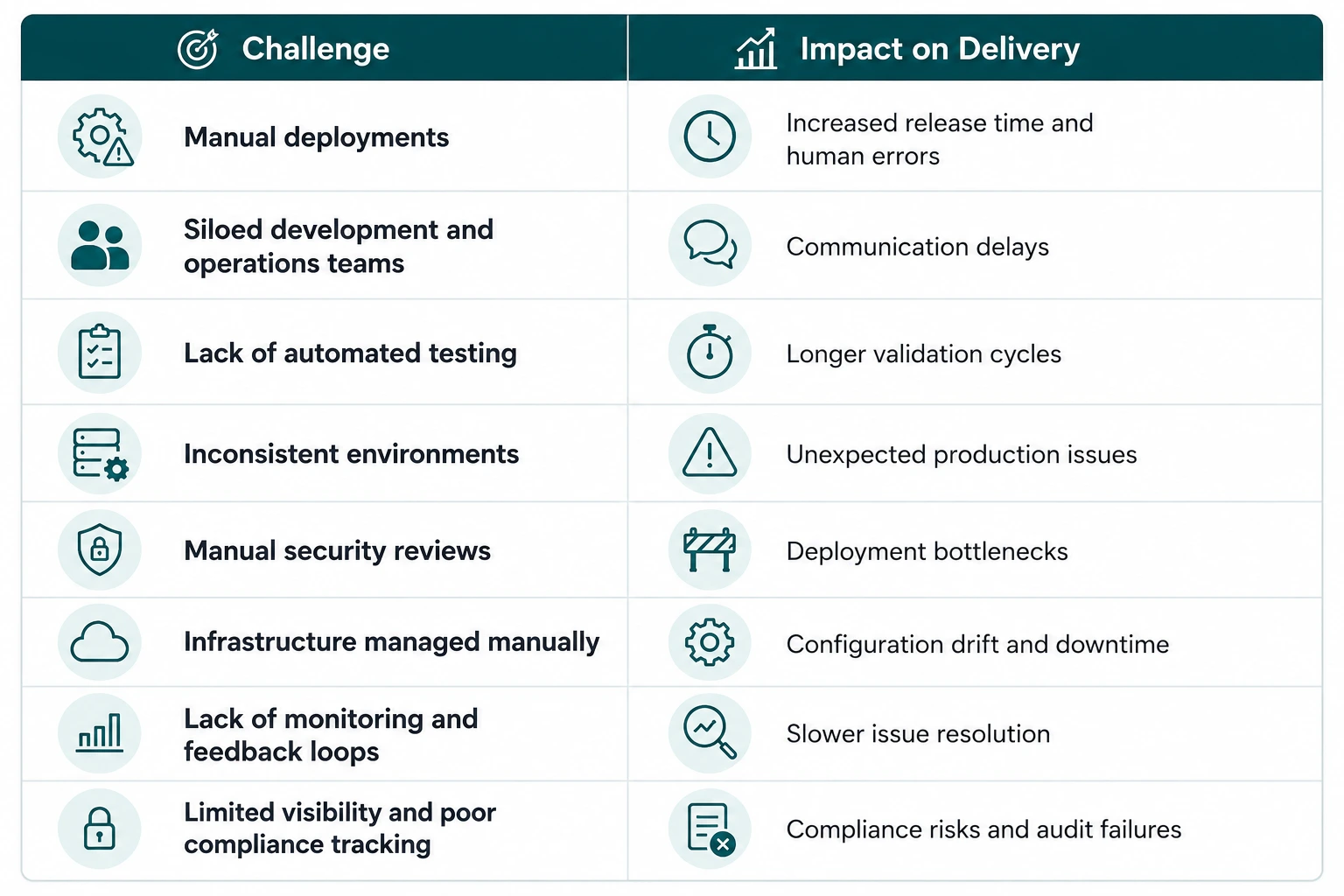
Organizations often experience these issues even after investing heavily in cloud migration and Agile transformation initiatives.
What Is DevOps and How Does It Solve Release Delays?
DevOps is a software delivery approach that integrates development, operations, quality assurance, and infrastructure management into a single continuous workflow.
The primary objective of DevOps is to enable faster, more reliable, and repeatable software delivery.
Instead of treating development and operations as separate functions, DevOps creates a collaborative environment supported by automation. Here’s how modern DevOps include:
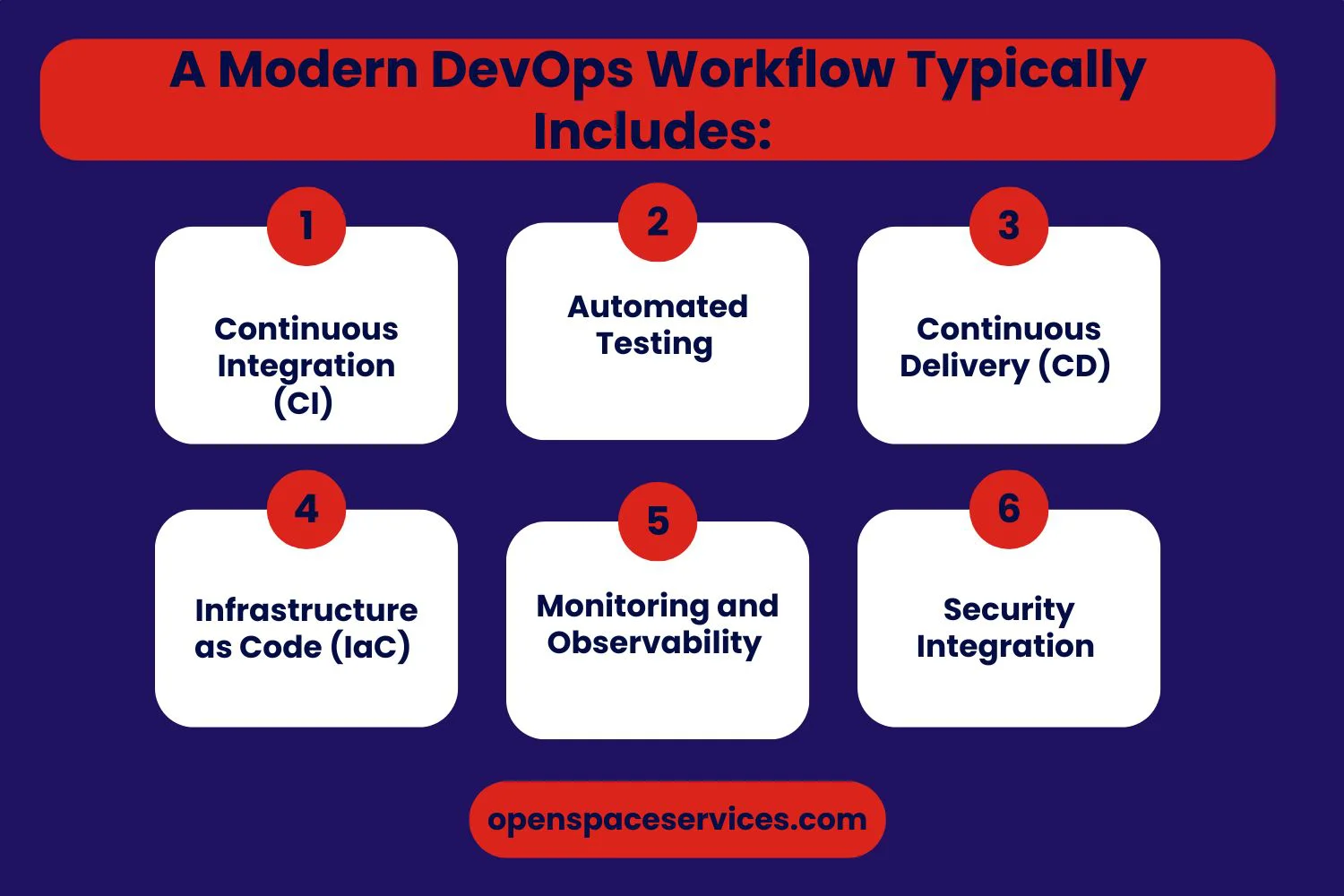
Together, these practices reduce deployment friction and improve release velocity.
Signs Your Organization Needs DevOps
Many businesses are already experiencing DevOps challenges without realizing it.
You may benefit from DevOps implementation if:
Deployments require multiple manual approvals
Every manual checkpoint introduces delays and increases the risk of errors.
Releases happen only once every few weeks or months
Slow release cycles reduce business agility and delay customer feedback.
Development teams wait for infrastructure provisioning
Infrastructure bottlenecks prevent developers from shipping features efficiently.
Production issues are difficult to diagnose
Limited visibility often leads to prolonged downtime and customer dissatisfaction.
Teams spend more time maintaining systems than innovating
Engineering resources become trapped in operational work instead of driving business growth.
DevOps vs Traditional Software Delivery
Understanding the difference between traditional software delivery and DevOps helps explain why many organizations struggle to scale.
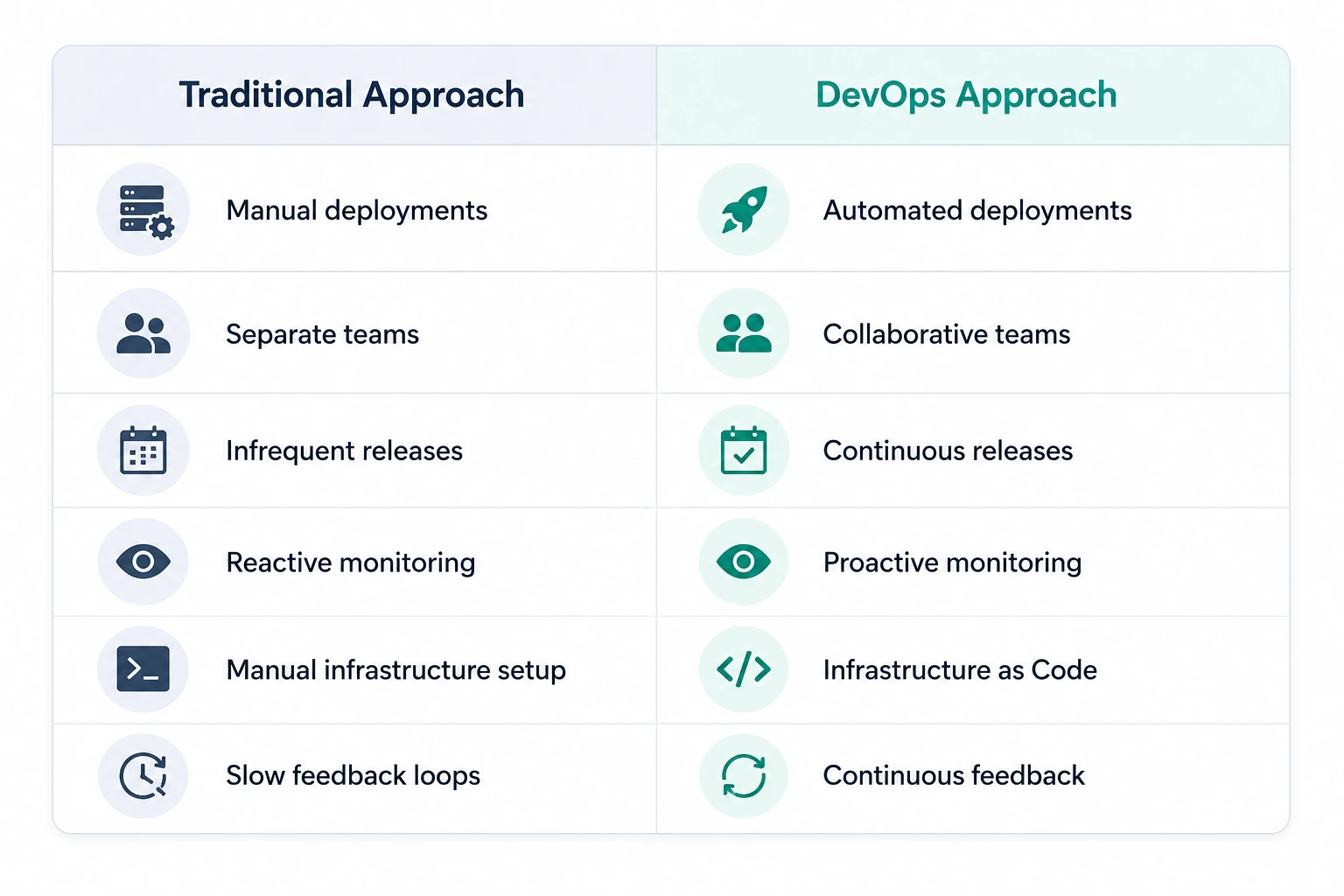
The result is faster delivery, improved reliability, and greater operational efficiency.
What Is Infrastructure as Code (IaC)?
Infrastructure as Code is the practice of managing infrastructure through machine-readable configuration files instead of manual processes.
Infrastructure as Code allows teams to:
- Provision environments consistently
- Reduce configuration errors
- Scale infrastructure rapidly
- Improve disaster recovery capabilities
- Support automated deployments
IaC is a foundational component of modern DevOps strategies.
What Is Continuous Integration and Continuous Delivery?
Continuous Integration (CI)
Continuous Integration is the practice of automatically testing and validating code whenever developers make changes.
The goal is to identify issues early before they reach production.
Continuous Delivery (CD)
Continuous Delivery automates the release process, allowing validated code to be deployed quickly and consistently.
Together, CI/CD pipelines reduce release risk while improving deployment speed.
How DevOps Improves Business Outcomes
Organizations often focus on the technical benefits of DevOps, but the business impact is equally significant.
DevOps helps businesses accelerate software delivery through cloud infrastructure optimization and DevOps automation:
- Accelerate time-to-market
- Improve application reliability
- Reduce operational costs
- Enhance customer experience
- Increase engineering productivity
- Improve security and compliance
- Support cloud-native transformation initiatives
The faster an organization can deliver reliable software, the faster it can respond to market opportunities and customer needs.
How OpenSpace Services Helps Organizations Accelerate Software Delivery
At OpenSpace Services, we help organizations modernize software delivery through comprehensive enterprise DevOps consulting services for cloud-native businesses
Our DevOps specialists work closely with technology teams to:
- Assess existing delivery processes
- Design scalable DevOps architectures
- Implement CI/CD pipelines
- Enable Infrastructure as Code
- Optimize cloud environments
- Improve monitoring and observability
- Integrate security into development workflows
Whether you're building cloud-native applications, modernizing legacy systems, or scaling engineering operations, our goal is to help your teams deliver software faster and more reliably.
Free DevOps Readiness Review
Our team can help identify:
- Hidden deployment inefficiencies
- Automation opportunities
- Infrastructure risks
- CI/CD gaps
- Cloud optimization opportunities
Schedule a DevOps Readiness Review
In a discovery session with OpenSpace Services, we'll evaluate your current software delivery process and highlight opportunities to improve release speed, reliability, and operational efficiency.
Because faster software delivery is a business advantage.
Final Thoughts
Slow software releases are rarely caused by a lack of developer talent or cloud infrastructure.
More often, they result from fragmented processes, manual workflows, and operational bottlenecks that accumulate over time.
DevOps provides a framework for removing these obstacles through automation, collaboration, and continuous delivery practices.
For organizations looking to accelerate software delivery, improve reliability, and maximize the value of their cloud investments, DevOps is no longer a competitive advantage; it has become a business necessity.