
Most founders think they are just hiring a development agency. In reality, they are choosing a mobile app development company that will define their product’s foundation, whether you’re considering mobile app development in USA or working with a global team.
With the rise of global teams, many founders now evaluate both local providers and an outsourcing mobile app development agency to balance cost, speed, and expertise.
A wrong decision here does not just delay timelines. It creates problems that stay hidden until it is too late. Slow performance, fragile features, constant rework, and a product that struggles to scale.
And the difficult part is this: most agencies look equally capable on the surface.
Clean portfolios. Confident pitches. Promises of speed and quality.
But complex native app development is not about how things look. It is about how things are built underneath.
This guide will help you cut through that noise and make a decision you will not regret six months later.
TLDR: How to Vet the Right Agency
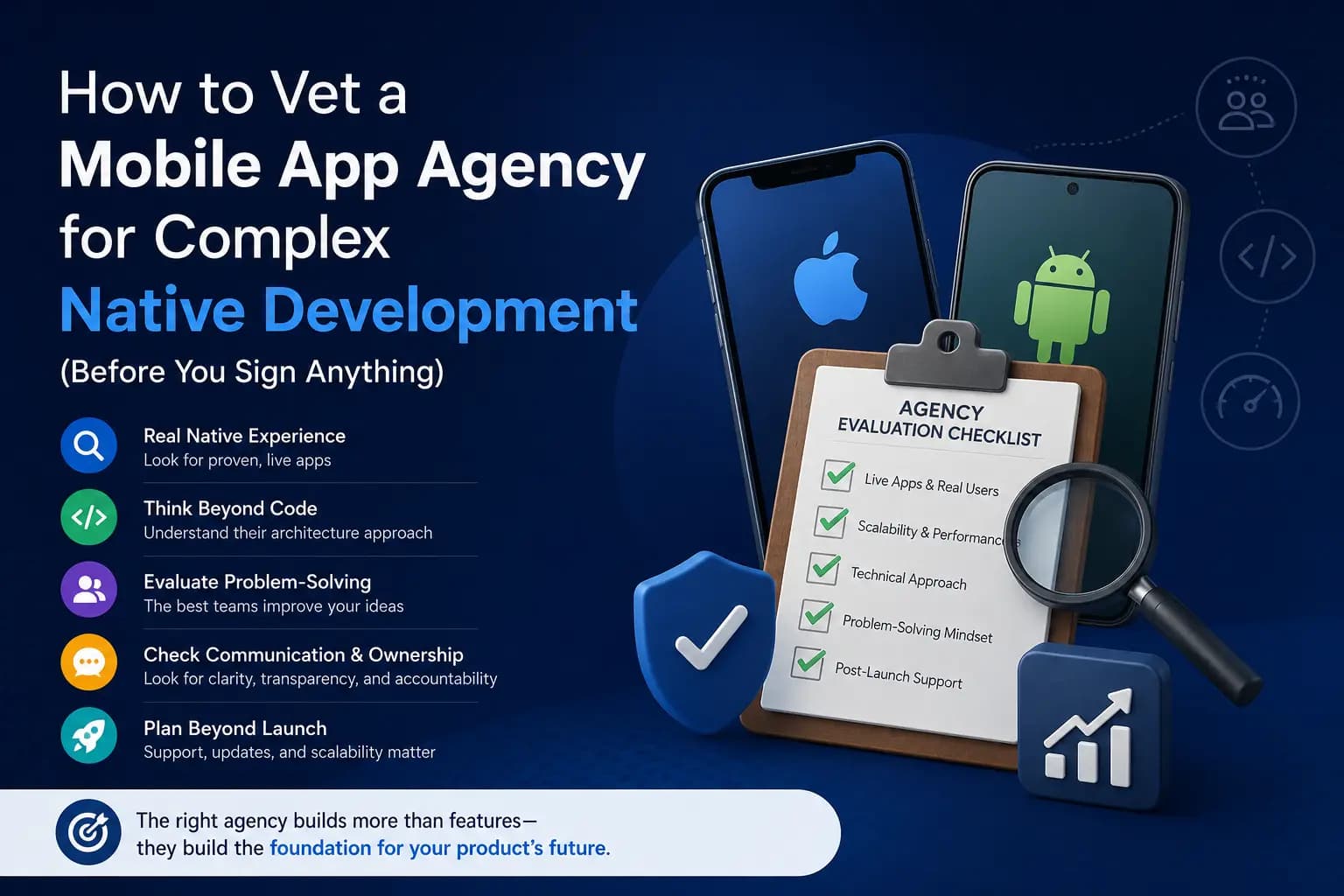
If you want a quick checklist, focus on this:
- Look for real native experience, not just cross-platform work
- Ask for live apps, not just designs or prototypes
- Understand how they handle scale and performance
- Evaluate how they think, not just what they say
- Always start small before committing fully
Everything else is secondary. This applies whether you're hiring a local mobile app agency USA or an offshore development partner.
What “Complex Native Development” Actually Means
Not every mobile app needs deep native expertise. But if you are working with a native mobile app development company that needs to handle performance, scalability, and integrations:
- Real-time features like chat, tracking, or live updates
- Heavy backend integrations (payments, APIs, third-party systems)
- High user load or scaling expectations
- Performance-sensitive use cases (fintech, logistics, marketplaces)
In these cases, small technical decisions made early can either support your growth or silently block it.
This is where many agencies struggle. They are comfortable building apps that look good. They are not always equipped to build apps that hold up under pressure. This is especially relevant for businesses building products for the mobile app US market, where performance expectations are significantly higher.
Also Read:Native vs Cross-Platform in 2026: When the Performance Gap Actually Matters
Why Most Agencies Fail at Native Projects
This maybe uncomfortable, but important to understand.
This issue is common across both offshore teams and some mobile app agency USA providers that prioritise speed over long-term scalability. Many mobile app development agencies struggle because they optimise for launch instead of long-term performance:
- They rely on shortcuts or reusable templates that do not scale
- They underestimate platform-specific behaviour in iOS and Android
- They optimise for launch, not for long-term stability
- They focus on delivering features, not building strong foundations
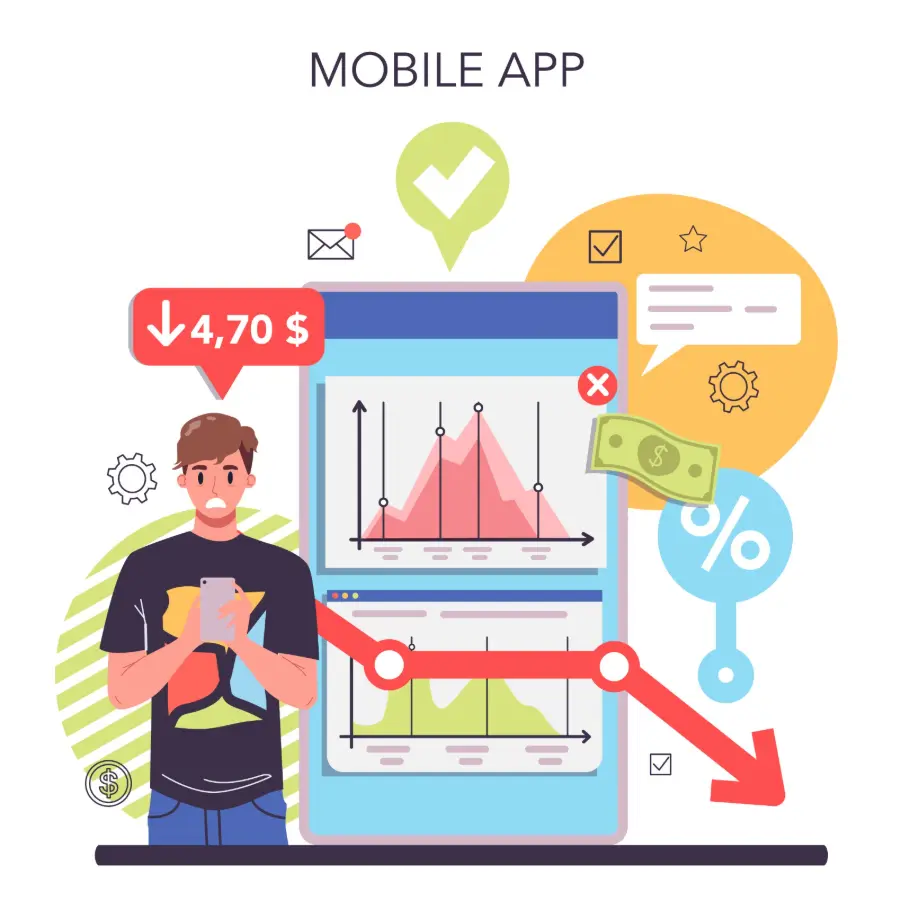
This often leads to long-term inefficiencies. Studies show developers spend up to35% - 50% of their time fixing bugs instead of building new features.
The result is an app that works in the beginning but becomes harder and more expensive to maintain over time.
What You Must Check Before Hiring a Mobile App Development Company
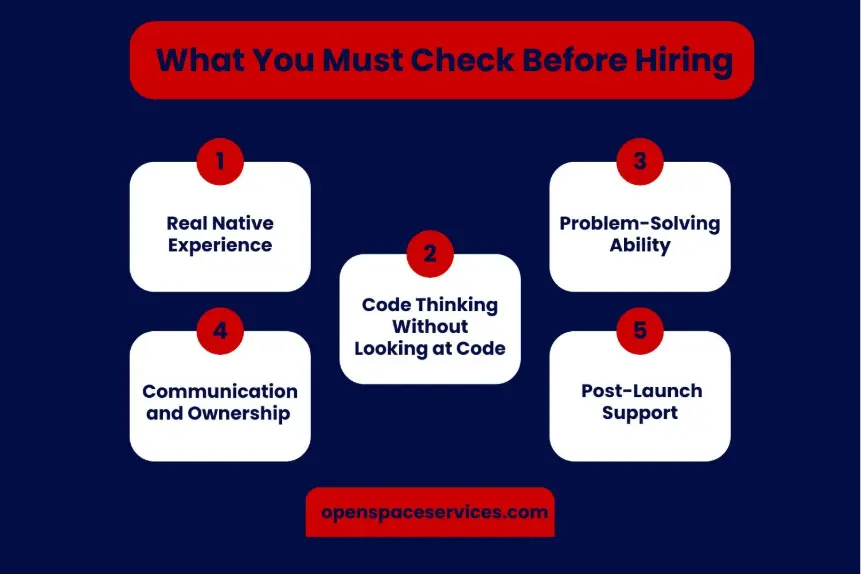
Whether you're evaluating an outsourcing mobile app development agency or a local partner, these factors remain critical.
This is where you need to go beyond surface-level evaluation. Founders evaluating agencies should also understand how to evaluate a custom mobile app development partner beyond portfolio quality and pricing alone.
1. Real Native Experience (Not Just Claims)
A strong portfolio from a mobile app agency USA should include real-world applications with active users and measurable performance. Do not rely on what agencies say. Look at what they have built.
Ask for:
- Apps available on the App Store or Play Store
- Use cases that involve real users and real complexity
- Examples where performance or scale mattered
If an agency cannot show this, they are likely learning on your project.
2. Code Thinking Without Looking at Code
This level of clarity is what separates experienced teams offering mobile app development in USA from those relying on surface-level delivery. You do not need to review their code, but you do need to understand how they think about building systems.
Ask:
- How do you structure apps for long-term maintainability?
- What happens when the app scales beyond initial expectations?
- How do you handle future updates and new features?
This matters because according to IBM, fixing issues later can be up to 100 times more expensive than addressing them during development.
Strong teams will give clear, structured answers. Weak teams will stay vague.
3. Problem-Solving Ability (This Matters More Than Skills)
The best agencies do not just follow instructions. They improve them.
Notice if they:
- Question your assumptions
- Suggest better alternatives
- Highlight risks you may have missed
If an agency agrees with everything you say, that is not alignment. That is a warning sign.
4. Communication and Ownership
Communication becomes even more critical when working with an outsourcing mobile app development agency, where alignment and clarity can directly impact timelines. Good development is not just technical. It is also operational.
Look for:
- Clear timelines with realistic expectations
- Transparency about risks and trade-offs
- Regular, proactive updates
Avoid teams that:
- Overpromise speed
- Avoid difficult conversations
- Give generic responses
5. Post-Launch Support
Your app is not finished at launch. In many ways, that is when the real work begins.
Ask:
- How do you handle bugs and updates?
- What happens when OS versions change?
- How do you support scaling after launch?
Agencies that think beyond launch are the ones you want.
Questions You Should Ask Before Signing
These questions help you evaluate both local teams and mobile app agency USA providers more effectively. Businesses comparing vendors should also review this guide on how to choose the right mobile app development agency before making long-term product decisions.
- “What would you do differently if this were your own product?”
- “Where do you see the biggest risks in this project?”
- “How will this app perform when usage increases significantly?”
- “What are common mistakes you have seen in similar projects?”
Pay attention to how they answer, not just what they answer.
Key Risks You Should Not Overlook when Checking Mobile App Development Agency
These risks apply whether you're working with an offshore partner or a mobile app US focused development team. Some signals are too important to overlook.
- Portfolio shows only UI designs, not real products
- No clear explanation of technical decisions
- Unrealistic timelines with no breakdown
- Avoidance of detailed discussions
- No mention of risks, trade-offs, or limitations
If everything sounds easy, something is being missed.
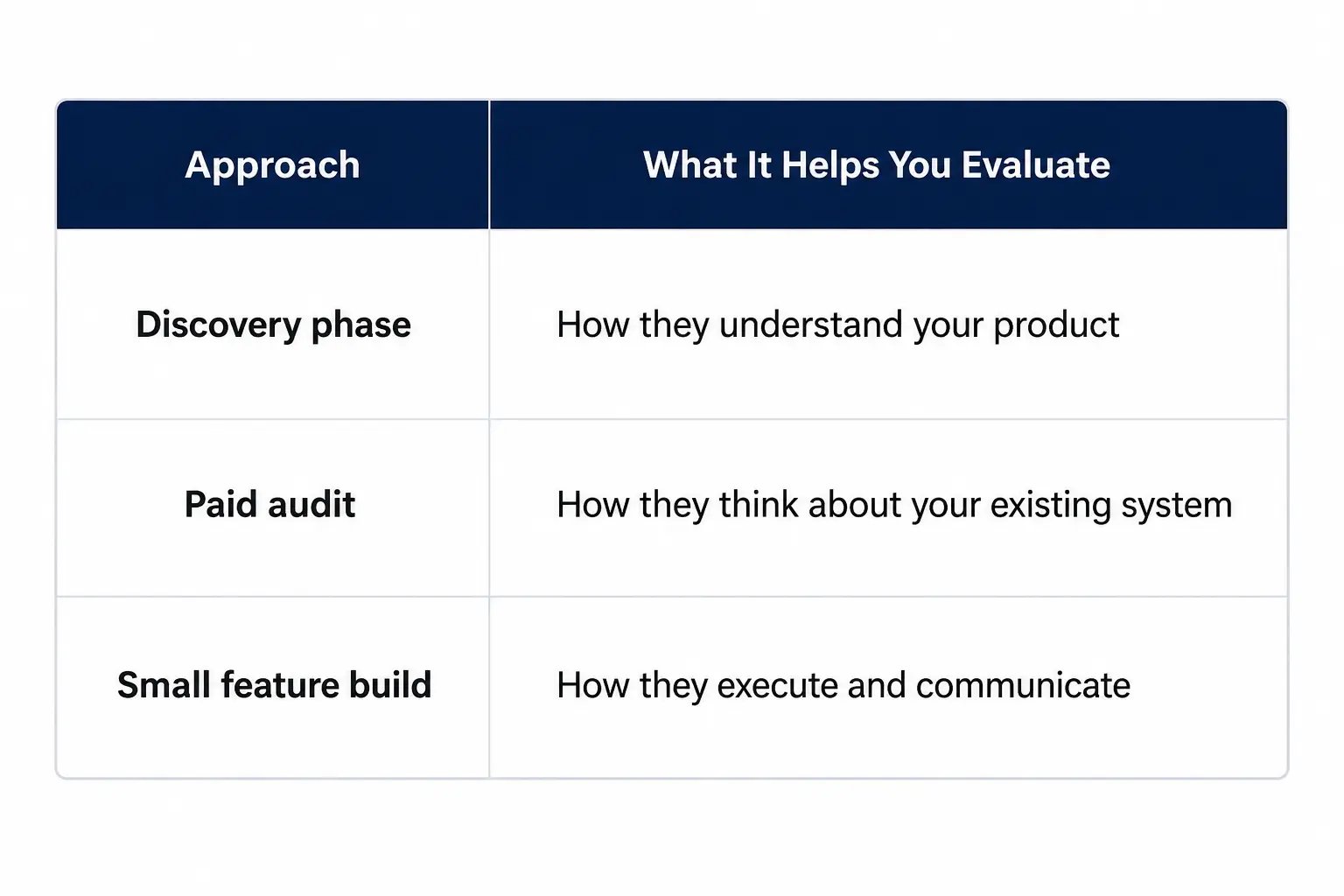
The Smart Way to De-Risk Your Decision
You do not need to commit immediately. In fact, you should not. Start with a smaller engagement.
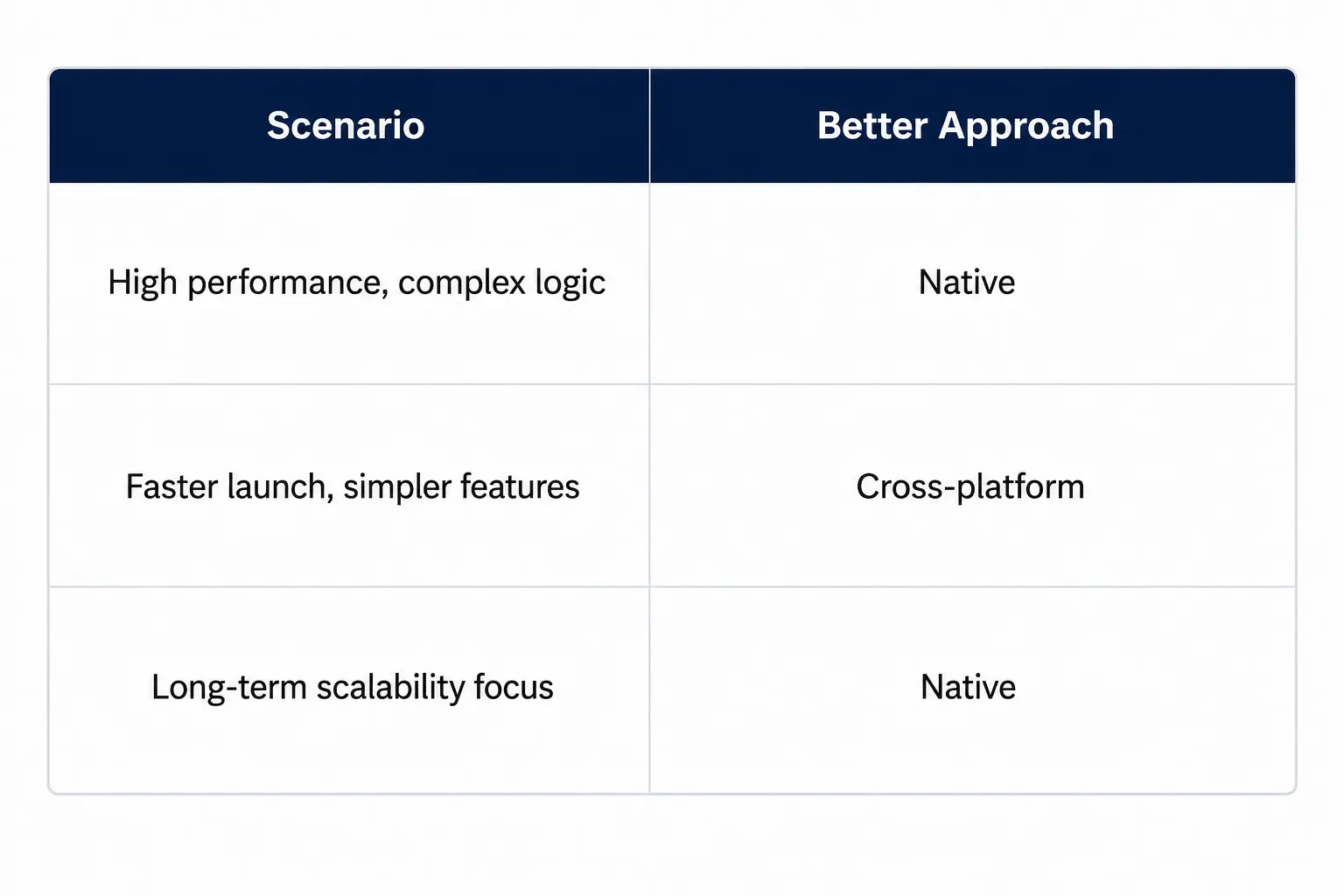
Native vs Cross-Platform: Are You Asking the Right Question?
Many conversations start with the wrong question. It is not about what the agency prefers, rather what your product needs. The more important consideration is understanding when custom mobile app development makes sense based on scalability, product complexity, and long-term business goals.
Final Thought
You are not just hiring someone to build features.
You are choosing:
- How your product will behave under pressure
- How quickly you can evolve
- How much you will spend fixing things later
The right agency will not just build what you ask for. They will help you build what actually works.
If you are evaluating agencies for a complex native app, it helps to have an experienced perspective. Openspace Services brings deep expertise in native mobile development, scalable architecture, and long-term product thinking. Our team focuses on building apps that perform reliably under real-world conditions, not just at launch. Explore Openspace Services to understand how the right technical foundation can support your product’s growth and stability.