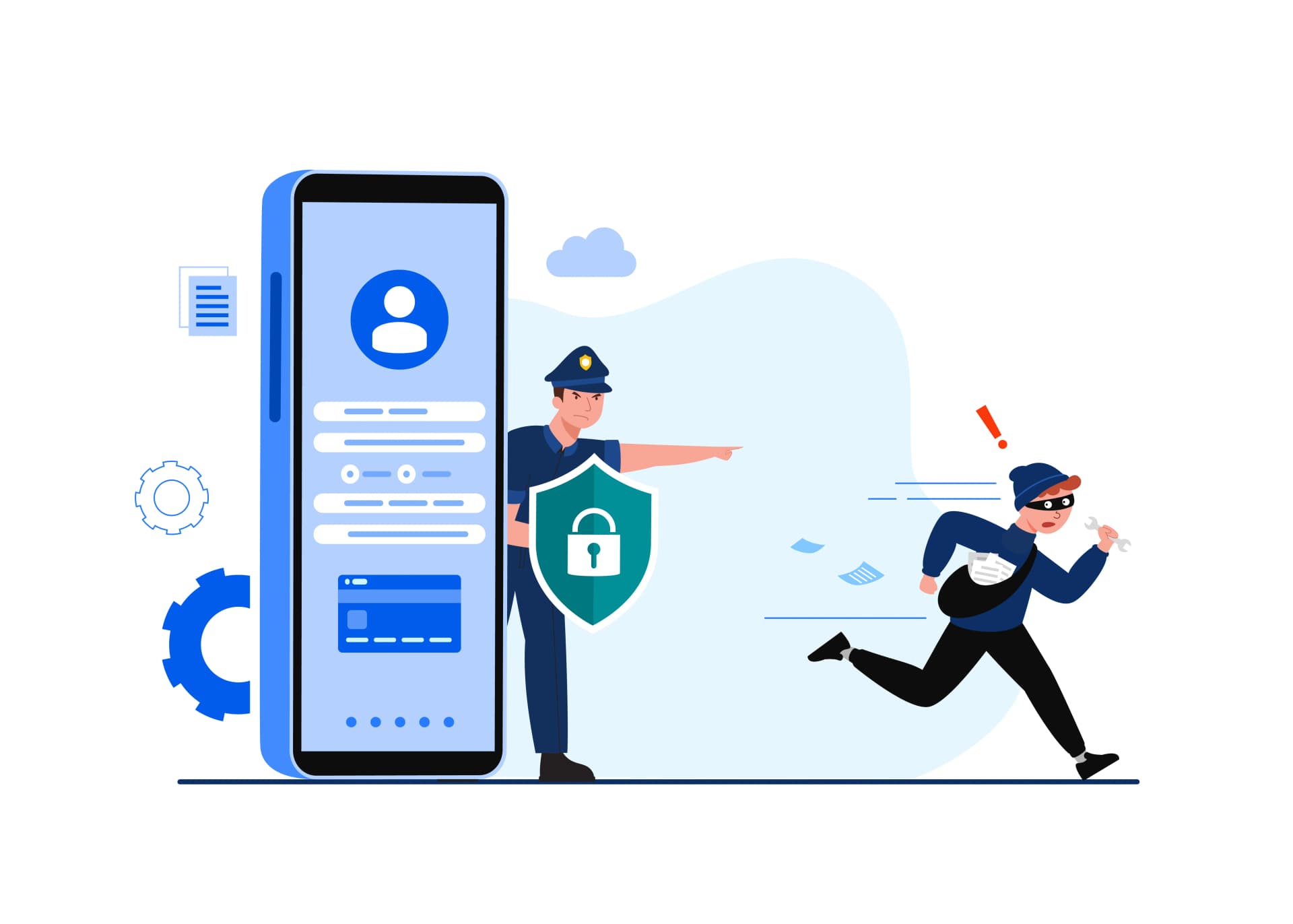
Quick answer: Strong mobile app security covers eight areas: storage, encryption, authentication, network, platform, code, resilience and privacy. These are the groups in OWASP's Mobile Application Security Verification Standard (MASVS). On top of that, US businesses must meet the rules for their industry, such as HIPAA, PCI DSS or COPPA, and the state privacy laws that apply to their users.
When a CISO asks me about an app, the first question is rarely "is it secure?" It's "can you prove it?" That's a fair question. In regulated industries, "trust us" isn't a security control.
This checklist is designed for CTOs, CISOs and compliance leads evaluating security before a new app goes into development. It follows OWASP's mobile security guidance and helps teams identify the controls they should discuss with their development partner. Businesses planning a new product can also explore mobile app development services in the USA to understand how security, architecture, testing and post-launch support can fit into the development lifecycle.
Why is Mobile App Security now a Buying Criterion?
Because your customers' security teams now review your app before they buy. In healthcare, finance and other regulated sectors, a vendor security questionnaire is a normal step in procurement. An app built to a known standard moves through that step faster.
Think of security as part of the product, not a cost centre. When your answers are ready before the questionnaire arrives, deals stay on schedule.
"In regulated industries, the security questionnaire isn't paperwork. It's an audition. Show up with the answers before they ask the questions, and you've already made the shortlist."Niket Shah, Founder, OpenSpace Services
What Should a Mobile App Security Checklist Cover?
It should cover all eight groups in OWASP MASVS, the most widely used open standard for mobile app security. Following mobile app security best practices means checking every group, not just encryption and passwords.
| Metric | What it Tells You |
|---|---|
| Time from brief to live page | How much faster campaigns launch |
| Developer tickets from marketing | How independent the team has become |
| Page speed (Core Web Vitals) | Whether pages load faster for visitors |
| Content reuse across channels | How much duplicate work you've removed |
| Campaign page conversion rate | Whether faster, better pages bring more leads |
OWASP's Mobile Top 10, updated in 2024, is a good companion list. It ranks the most common real-world weaknesses, from improper credential use to weak cryptography.
Authentication and Access Control
Every user should prove who they are, and every action should be checked on the server. The app's job is to collect credentials safely. The server's job is to decide what each user may do.
- Multi-factor authentication for sensitive accounts and admin access
- Biometric login linked to a securely stored token, not a stored password
- Short session timeouts for sensitive data, with secure token refresh
- Role-based access, checked on the server for every request
- Account lockout or throttling after repeated failed logins
Is Face ID enough on its own? It's a great way to unlock the app, but it only confirms the person holding the phone. The biometric should unlock a token kept in the phone's secure storage, and the server should still check that the session is valid.
Data Encryption and Storage
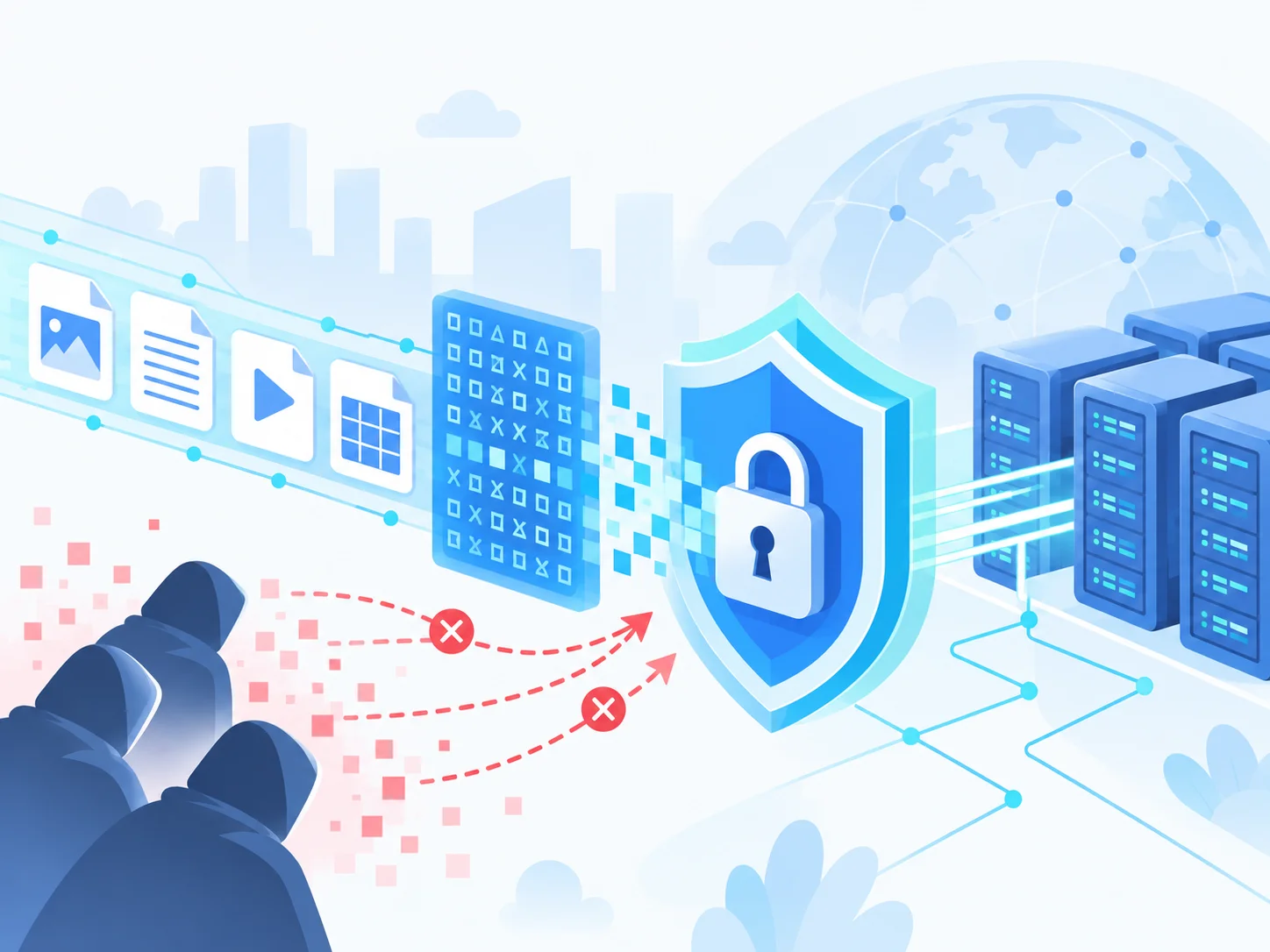
Store as little sensitive data on the device as you can and encrypt everything you do store. Data that never touches the phone can't leak from it.
The old advice was that the app's private storage folder is safe enough for tokens and personal data. That's outdated now that both platforms offer hardware-backed secure storage: the iOS Keychain and the Android Keystore. Sensitive values belong there, not in plain app files or preferences.
- No passwords, card numbers or health data stored in plain text
- Tokens and keys kept in Keychain or Keystore
- Sensitive screens hidden from app switcher previews and screenshots where needed
- Logs free of personal data
- Backups excluded for sensitive files
Network and API security
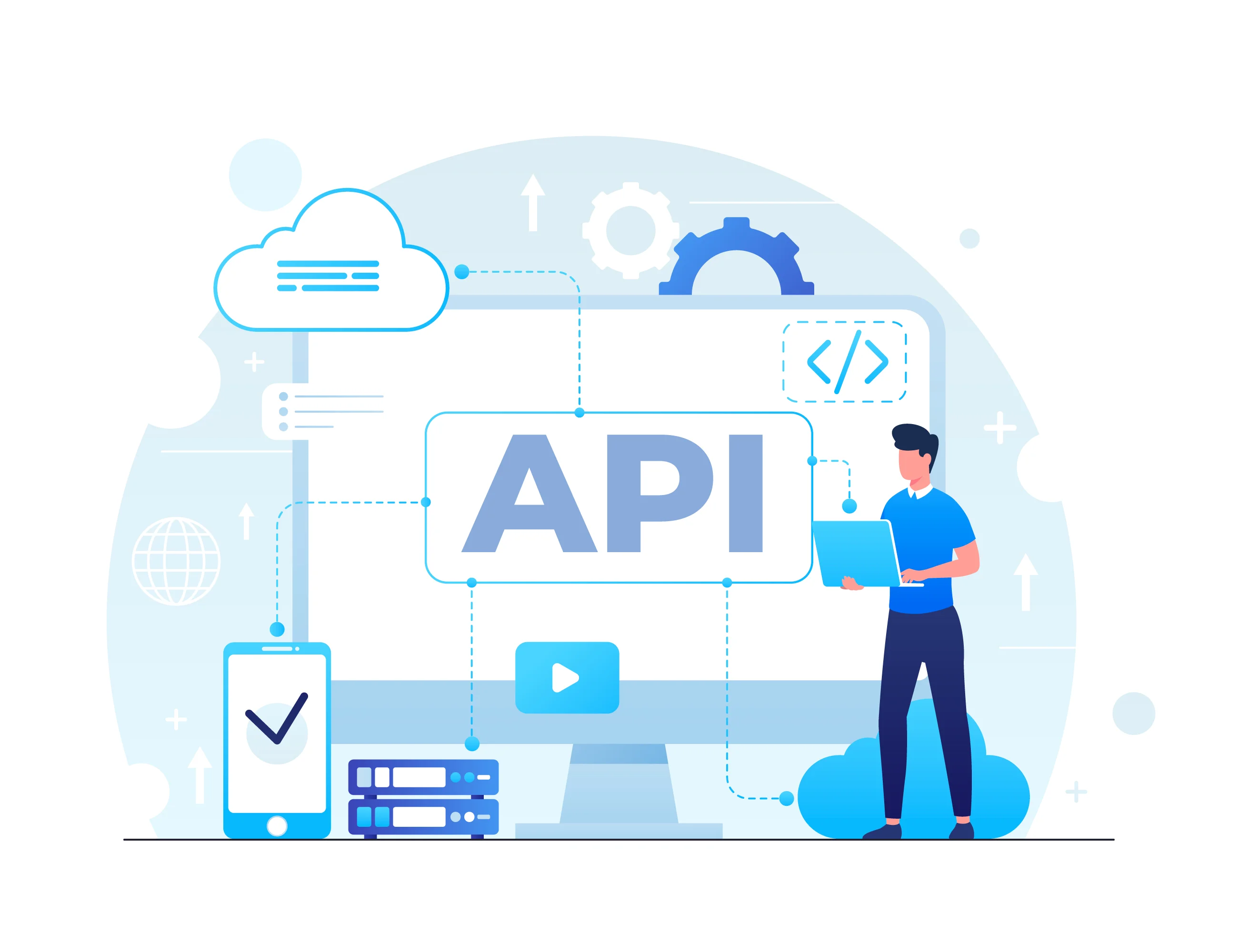
Treat every network as hostile and every request as untrusted. Encrypt all traffic with TLS, and validate every input on the server, even if the app already checked it.
- TLS on every connection, with certificate validation enabled
- Certificate pinning for high-risk apps, such as banking or health
- API authentication on every endpoint, with rate limiting
- Server-side validation of all inputs
- No API keys or secrets hardcoded in the app
“If there's one thing I'd ban from mobile app development, it's hardcoded secrets. And here's why. Developers sometimes forget one very simple rule: if you've shipped it inside the app, it's no longer a secret. You might have hidden it beautifully, buried it deep in the code, even given it a rather clever name. Doesn't matter. Give someone the right tools and enough curiosity, andthey'll find it. So, if something needs to stay secret, the app is the last place it belongs.” -Akshay Maniar, Senior Software Engineer, OpenSpace Services
Code Quality, Third-Party SDKs and the Supply Chain
Your app's security depends on more than the mobile code itself. Third-party SDKs, backend APIs, content systems and deployment infrastructure can all affect the overall risk. For organisations coordinating several technology vendors, our guide tomanaging mobile app, CMS and DevOps development together explains how shared architecture and clearer ownership can reduce integration gaps. OWASP ranks inadequate supply chain security as M2 in its 2024 Mobile Top 10.
- A list of every third-party SDK and library, with versions, called a software bill of materials (SBOM)
- Automated checks for known vulnerabilities in dependencies
- A review of what data each SDK collects before it's added
- A regular update schedule for libraries and the app itself
- Code obfuscation and tamper checks for high-risk apps
"Every SDK you add is a guest with a key to your house. Most guests are lovely. You still check what they're carrying before you let them in." Akshay Maniar, Senior Software Engineer, OpenSpace Services.
Privacy, Permissions and App Store Disclosures
Good mobile app data privacy means collecting only what you need, asking clearly, and describing it honestly in the app stores. Apple's privacy labels and Google Play's Data safety form must match what your app really collects, including data gathered by SDKs.
- Permissions requested only when needed, with a clear reason
- Consent captured before tracking or sharing data
- Privacy labels and Data safety answers checked against every SDK
- A simple way for users to request access to or deletion of their data
- A data retention policy, with old data deleted on schedule
Why check the SDKs specifically? Because the store forms ask what your app collects, and an SDK's collection counts as yours. If a crash-reporting tool sends device data you didn't list, your disclosure is wrong, even though you never wrote that code.
Testing, Audits and Monitoring
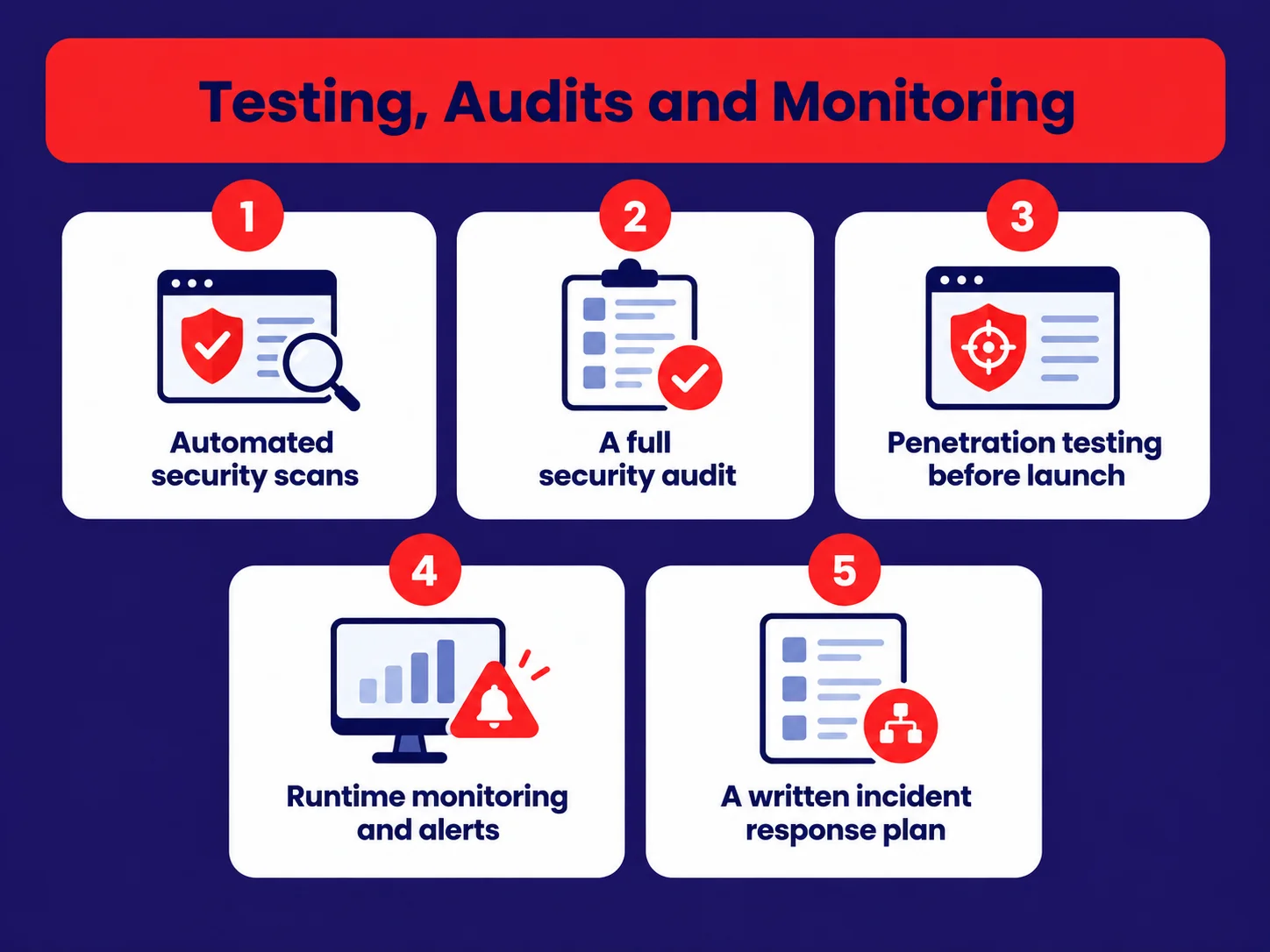
Test before launch, after major changes and at regular intervals. A mobile app security audit reviews code, configuration and processes against a defined security standard, while penetration testing actively examines how an attacker might exploit weaknesses. Include mobile app quality assurance and testing in the release process so functional issues, regressions and security-related defects can be identified before they affect users.
- Automated security scans in the build pipeline
- A full security audit against MASVS before first launch
- Penetration testing before launch and after major releases
- Runtime monitoring and alerts for unusual activity
- A written incident response plan, tested at least once
Which Compliance Rules Apply to Your Industry?
The mobile app compliance requirements you face depend on your industry, users and the data you collect. Healthcare apps, in particular, need careful planning around sensitive information, access controls, secure document handling and the requirements that apply to the organisation. For a more industry-specific perspective, readour guide to healthcare mobile app development services in the USA.
| Area | Rule | What's current |
|---|---|---|
| Healthcare | HIPAA Security Rule | A proposed update would require encryption and MFA. It isn't final yet, and the current target for final action is July 2027 |
| Health and wellness apps outside HIPAA | FTC Health Breach Notification Rule | Applies to most health apps that HIPAA doesn't cover, with updated rules effective 29 July 2024 |
| Card payments | PCI DSS | Version 4.0.1 is current, and its future-dated requirements became mandatory on 31 March 2025 |
| Children under 13 | COPPA | Amendments took effect on 23 June 2025, with compliance required by 22 April 2026. They add separate parental consent for sharing data with third parties |
| Consumer data | State privacy laws | 24 states have signed comprehensive privacy laws, and 20 are in force |
Other rules can apply too, such as GLBA for financial institutions and FERPA for student records.
Building a HIPAA compliant mobile app today? Build to the proposed update now. Encryption and MFA are good practice anyway, and you won't need to rework the app if the rule is finalised.
The old advice was to look for a vendor with a "HIPAA certified" badge. That never meant much, because HHS doesn't certify apps or vendors for HIPAA. What matters is the safeguards in the app, and a signed business associate agreement with every vendor that handles protected health information.
How do You Build Security into the Development Lifecycle?
Build security into every stage, from initial design through updates after launch. Secure mobile app development works best when code reviews, automated security checks, dependency scanning and deployment controls run alongside normal engineering work. DevSecOps services can help teams integrate these checks into their CI/CD pipelines instead of relying on a single security review just before release.
The old advice was to run one security test just before launch. That made sense when releases happened twice a year. Now that apps ship updates every few weeks, the checks need to run automatically in the build pipeline, on every change.
- Design: threat modelling, data flow maps and privacy decisions
- Build: secure coding standards and peer code review
- Test: automated scans on every build, plus manual testing before release
- Release: signed builds, store disclosures checked, secrets kept out of the app
- Monitor: crash and security alerts, regular patching and dependency updates
OurDevSecOps guide explains how to add these checks without slowing your team down.
How do You Assess a Development Partner's Security practices?
Ask for evidence, not promises. A development partner should be able to explain its secure coding practices, testing process, dependency management, access controls and incident response approach. Before choosing a vendor, review its mobile application development services and ask how security responsibilities are handled throughout development, release and ongoing maintenance and If you're comparing vendors, read our guide on choosing the right mobile app development agency to evaluate technical capability, security readiness, delivery practices and long-term support.
[table:DevelopmentPartner'sSecurity]
On our own healthcare work, such as the MyHealthMeter app, encrypted upload and download of medical reports was part of the first build, not added later. That's the kind of detail worth asking any partner about.
Two questions I'd ask any partner, including us:
- Which security finding from a past project took you longest to fix, and why?
- What would you refuse to build, even if a client asked?
Mobile App Security Checklist
Use this summary before kick-off and again before launch.
- MFA and server-side access checks in place
- Sensitive data minimised and kept in Keychain or Keystore
- TLS everywhere, no hardcoded secrets
- SBOM created and dependencies scanned
- Privacy labels and Data safety form match every SDK
- Industry rules identified and checked with counsel
- Security scans running in the build pipeline
- Audit and penetration test completed before launch
- Incident response plan written and tested
- Code, keys and store accounts owned by your company
Where Should You Start?
List every SDK in your current app, and next to each one, write what data it collects. If you can't fill in a line, you've found your first fix. That one exercise touches privacy, supply chain and compliance all at once.
When you're ready, our team at OpenSpace Services can review your app against this checklist and help you build mobile app security into every release. Explore our mobile app development services, along with DevOps, Wordpress, AI/ML, and more on our website or talk to usabout your app.