




Quick Answer: DevOps outsourcing gives a growing SaaS team access to DevOps skills without a full-time hire. An outside team can set up and maintain your release pipeline, cloud infrastructure, monitoring, and security through DevOps outsourcing services in the USA. It suits teams with paying customers and growing release pressure, but not yet enough DevOps work to keep a specialist busy full time.
In most young SaaS companies, DevOps starts as a side job. One developer sets up the first server and writes a deploy script. Then they become the person everyone calls when a release goes wrong.
That works for a while. But as customers grow, releases need to be fast, safe and repeatable, and a side job isn't enough. Here's how outsourcing fills that gap, and when it's time to hire your own.
Why do Growing SaaS Teams Struggle to keep Releases Reliable?
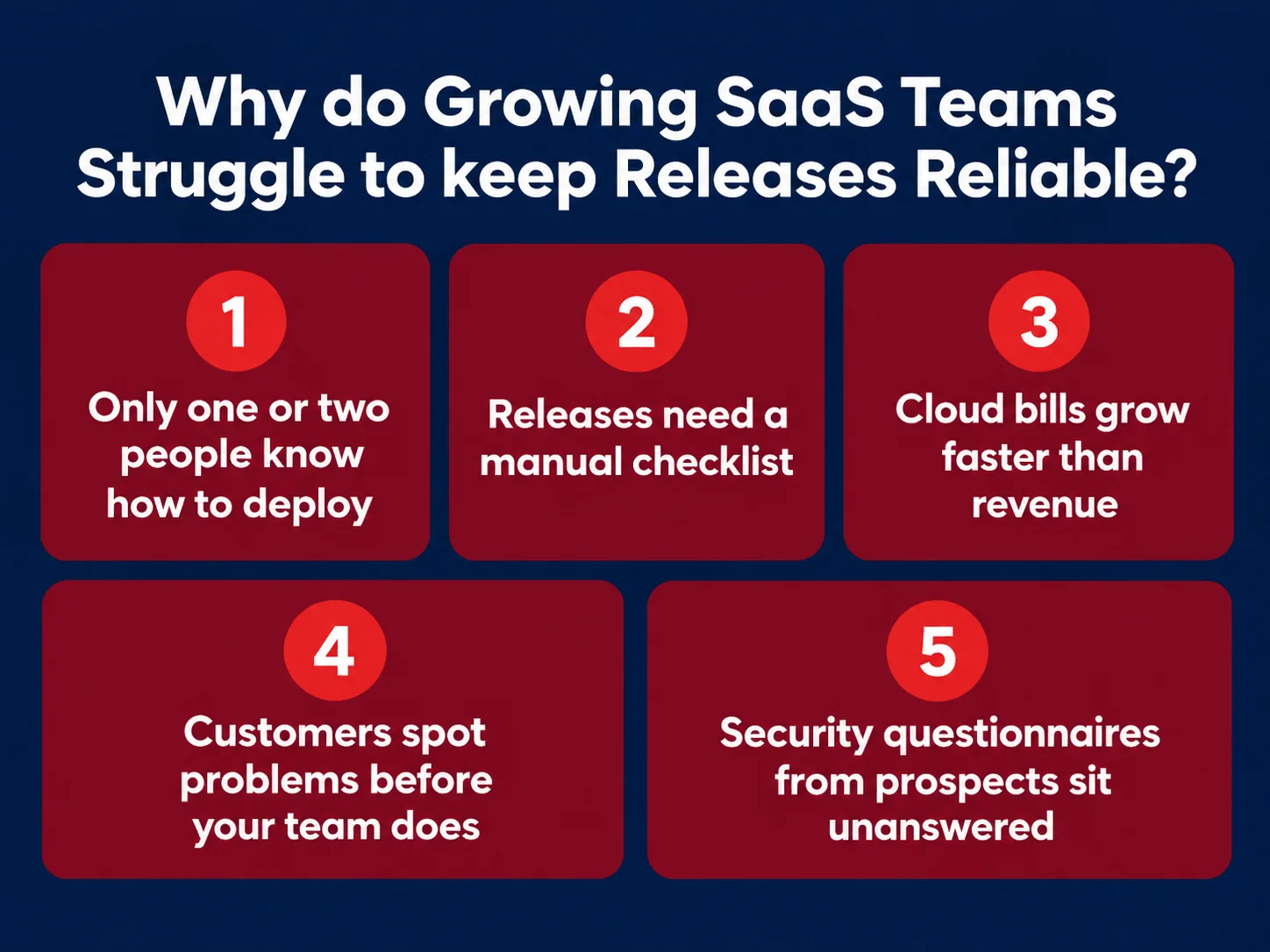
Most growing SaaS teams hit the same wall. Developers handle operations work part time, so releases slow down, problems take longer to fix, and product work gets pushed back.
Common signs:
- Only one or two people know how to deploy
- Releases need a manual checklist and a quiet afternoon
- Cloud bills grow faster than revenue
- Customers spot problems before your team does
- Security questionnaires from prospects sit unanswered
None of this means the team is doing anything wrong. It means the product has grown past the setup it started with. Our 10-minute DevOps assessment helps you check where you stand.
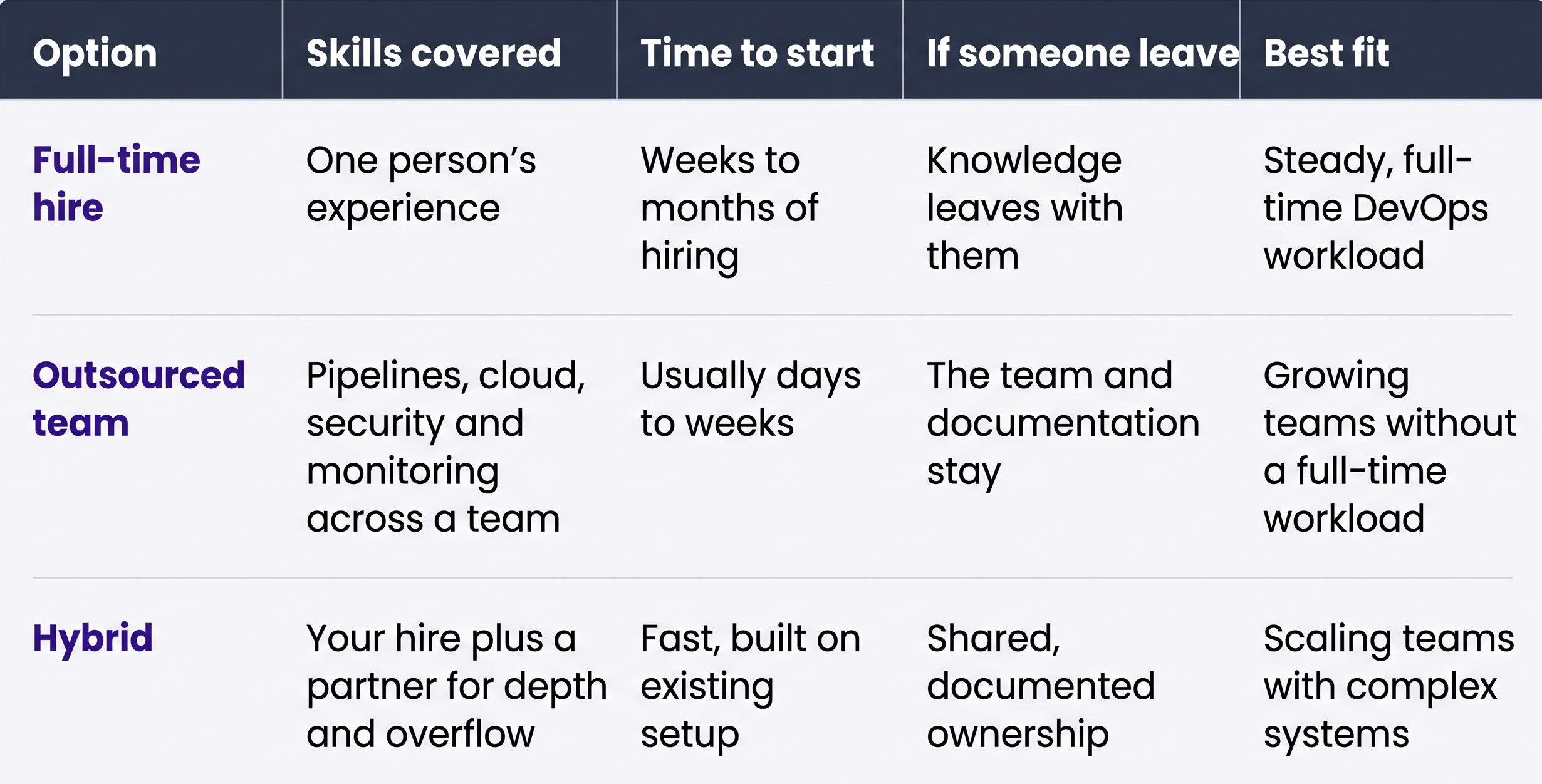
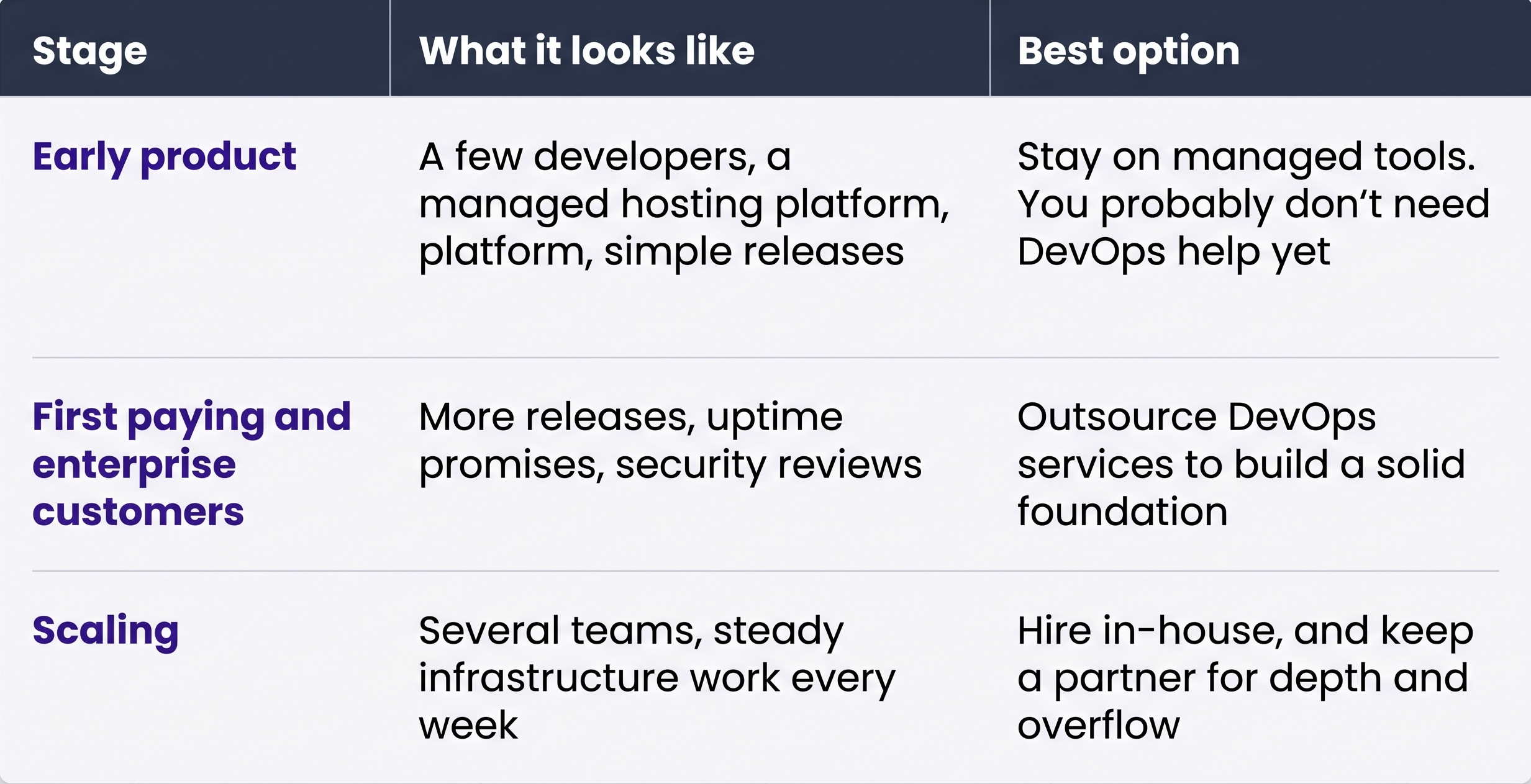
When Should a SaaS Team Outsource DevOps, and When Should it Hire?
The right choice depends on your stage. Very early teams often don't need DevOps help yet. Teams winning their first larger customers usually get the most from outsourcing. Teams with a steady, full-time workload do best with their own hire, backed by a partner.
"Every SaaS founder I talk to wants their engineers building the product, not babysitting servers at 2 a.m. Outsourcing DevOps early isn't about avoiding a hire. It's about hiring at the right time, when you know exactly what that person needs to own." Niket Shah, Founder, OpenSpace Services
What Does an Outsourced DevOps Team Handle?
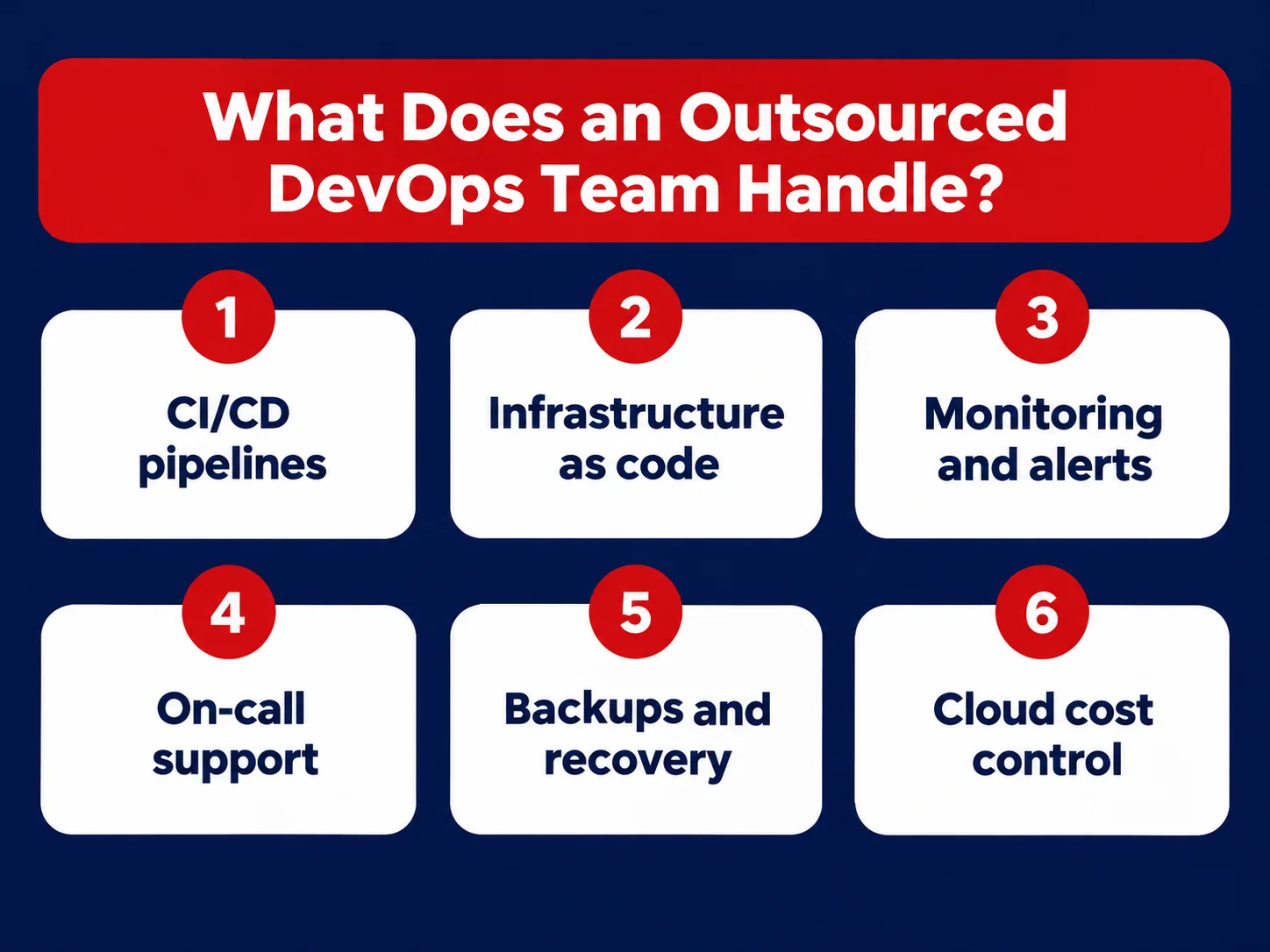
For teams new to release automation, understanding how a CI/CD pipeline works is a useful starting point before outsourcing its implementation. An outsourced team takes care of the systems that sit between your code and your customers. Good DevOps outsourcing services cover building those systems and running them day to day.
- CI/CD pipelines: Every change built, tested and deployed the same way
- Infrastructure as code: Servers and cloud settings defined in files, not set up by hand
- Monitoring and alerts: Problems spotted before customers notice
- On-call support: An agreed response plan when something breaks
- Backups and recovery: Tested, not just switched on
- Cloud cost control: Right-sized resources and no forgotten services
That last point matters more for SaaS than most businesses. Cloud hosting is part of what it costs to deliver your product, so every saving protects your margin. Cloud cost optimization through DevOps can help teams identify idle resources, improve infrastructure utilization, and connect cloud spending with actual workload demand.
What Does a Partner Set Up in the First Few Weeks?
The first weeks are about visibility and repeatability. A good partner learns your system, measures where you are, and makes the most fragile steps safe before changing anything big.
- Access review: who can reach what, with access moved to named, role-based accounts
- Baseline: current release speed, failure rate and recovery time
- Pipeline: an automated build, test and deploy path
- Infrastructure as code: your cloud setup written down in version-controlled files
- Monitoring: alerts for the problems that matter most
- Runbooks: step-by-step guides for deploys, rollbacks and incidents
"The first thing we do is get the infrastructure into code and write runbooks for every routine task. Once deploys, rollbacks and alerts are documented and repeatable, it doesn't matter who's on call. Anyone on the team can fix an issue at 3 a.m. without guessing." Dhananjay Kala, Senior DevOps Engineer, OpenSpace Services
We followed this approach on the Nirmal Industrial Controls platform, setting up CI/CD with GitLab and Jenkins for fast, reliable releases. Our guide to CI/CD pipelines explains each piece in plain terms.
How does Good DevOps Help You Win Enterprise Customers?
Larger customers want proof that your product is secure and well run. Many of the checks in their security reviews are DevOps work. A strong setup lets you answer those reviews with confidence and move deals forward faster.
Enterprise buyers often send a security questionnaire or ask for a SOC 2 report. Both look closely at:
- Who can access production, and how access is approved
- How code changes are reviewed, tested and released
- Whether activity is logged and monitored
- How data is backed up and restored
An outsourced DevOps services team can build and document these controls as part of everyday work. The SOC 2 audit itself is carried out by an independent CPA firm. But having the controls in place well before the audit makes preparing for it far easier. Our DevSecOps guide covers how to build security checks into your pipeline.
How do you Keep Control when DevOps is Outsourced?
You keep control by owning everything that matters: the accounts, the code and the documentation. A trustworthy DevOps outsourcing company works inside your systems, under your rules.
- Cloud and tool accounts sit under your company's name
- All infrastructure code lives in your repositories
- Access is role-based, and every change is logged
- Runbooks and diagrams are written for your team, not just the partner's
- Regular reports show your delivery metrics, so progress is visible
If a partner wants to keep any of this in their own accounts, ask why before you sign.
How do You Move from an Outsourced Team to Your Own DevOps Hire?
Plan the move from the start, and it becomes a smooth handover, not a restart. Because everything is already in code and documented, your first hire inherits a working system on day one.
- The partner builds and documents your foundation
- You decide what your first DevOps hire should own
- The partner helps interview candidates and onboard your hire
- Your hire takes the lead, and the partner shadows
- The partner stays on for overflow, specialist work or holiday cover
Many teams keep outsourced DevOps consulting services for occasional specialist needs, such as a major cloud migration or a security project, even after they hire. Our DevOps services work in both models.
What Should You do First?
Write down your last five releases. Note how long each one took and who had to be online for it. If the same one or two names keep appearing, you've found the first thing DevOps outsourcing should fix.
When you're ready, talk to our DevOps team about where your releases stand today.
